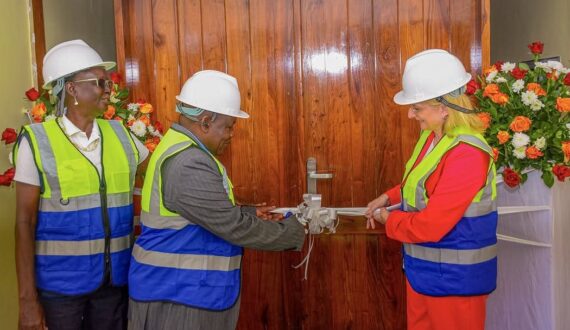
Nigeria begins construction of 500-bull-per-day modern abattoir in Jos
Project targets jobs, food safety improvements, and expanded meat processing capacity.

NIGERIA – The federal government of Nigeria has begun construction of a modern abattoir in Jos, Plateau State, designed to process up to 500 bulls per day as part of efforts to upgrade the country’s livestock and meat production system.
The project was launched by the Minister of Livestock Development, Idi Mukhtar Maiha, who said the facility is intended to modernise meat-processing operations, improve food safety standards, and support value addition across the livestock sector.
Officials said the abattoir will function as an integrated processing centre, combining slaughtering operations with systems for handling and converting by-products into commercial goods.
These by-products will include hides, skins, bones, blood, and fats, which are expected to be processed into leather products, fertiliser, animal feed ingredients, and biogas.
The government estimates that the facility could generate between 7,000 and 10,000 direct and indirect jobs across livestock production, transport services, veterinary care, cold-chain logistics, meat processing, and marketing activities.
Authorities selected Plateau State for the project due to its established livestock production base, supportive climate conditions, and the presence of the National Veterinary Research Institute in Vom.
The state government said the project aligns with ongoing efforts to promote ranching and modern livestock systems as part of broader agricultural transformation plans.
The Livestock Productivity and Resilience Support Project coordinator, Sanusi Abubakar, said the facility will be built to comply with international standards covering hygiene, animal welfare, food safety, and environmental management.
Funding for the project is being provided through the World Bank-supported Livestock Productivity and Resilience Support Project and will be implemented by the Plateau State Government.
Officials said the abattoir is expected to improve meat quality, attract investment in Nigeria’s livestock sector, and strengthen production and distribution networks.
Once completed, the facility is expected to serve as a regional centre for livestock processing, storage, distribution, and value-added meat production across surrounding markets.
Sign up HERE to receive our email newsletters with the latest news and insights from Africa and around the world, and follow us on our WhatsApp channel for updates.