Brazil poultry exporters reject South African dumping claims
South African importers argue that trade with Brazil supports food security while local producers face production constraints.
SOUTH AFRICA – Brazilian poultry exporters have rejected claims that their shipments to South Africa amount to dumping, arguing that imports mainly fill gaps in the local market when domestic supplies are disrupted.
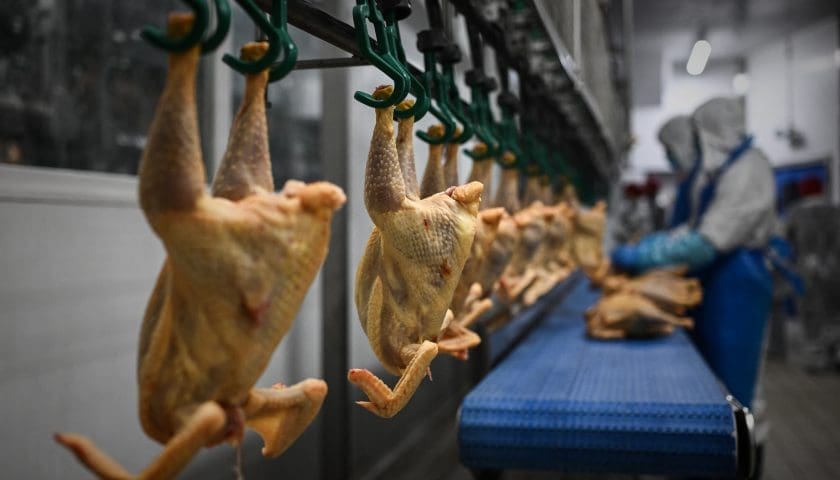
Ricardo Santin, president of the Brazilian Association of Animal Protein (ABPA), said Brazilian producers supply products such as mechanically deboned meat (MDM) that South Africa cannot produce in sufficient quantities.
Speaking at the International Animal Protein Trade Show (SIAVS) in São Paulo, Santin said Brazilian poultry helps maintain meat supplies during disruptions caused by avian influenza and other production challenges.
He said South Africa was Brazil’s fourth-largest market for chicken meat in 2025, receiving 336,022 tonnes, equivalent to 6.5% of Brazil’s total chicken exports.
The United Arab Emirates led Brazil’s export destinations with 479,944 tonnes, followed by Japan at 402,901 tonnes and Saudi Arabia at 397,225 tonnes.
Santin said the ABPA represents 140 companies, with its members accounting for 15% of Brazil’s poultry exports and 98% of the country’s pork exports.
Trade tensions continue
Estevao Carvalho, ABPA executive manager for markets, said trade between Brazil and South Africa has been affected by claims that imports threaten domestic producers, despite differences in the products supplied.
Carvalho said much of the Brazilian poultry entering South Africa is MDM, which is used in processed foods and pet food because local production of the ingredient is limited.
He added that Brazilian poultry faces import duties of 42% on deboned products, 62% on bone-in chicken and 82% on whole chickens entering South Africa.
Paul Matthew, chief executive of South Africa’s Association of Meat Importers and Exporters, said South Africa could learn from Brazil’s integrated poultry production system and develop its own export capacity.
Matthew said the country’s poultry master plan, introduced in 2019, included exports as a key objective, but domestic producers had yet to establish South Africa as a significant poultry exporter.
Meanwhile, Georg Southey, general manager of Merlog Foods, said imports remain important to South Africa’s food supply because domestic production cannot quickly cover every category.
Southey said imports make up about 10% of South Africa’s overall meat consumption, while Brazilian MDM is particularly important for affordable processed products such as viennas and polony.
He said these imports contribute to more than 100 million meals each week, while diseases including foot-and-mouth disease, African swine fever and avian influenza continue to pose risks to domestic meat production.
Sign up HERE to receive our email newsletters with the latest news and insights from Africa and around the world, and follow us on our WhatsApp channel for updates.