

Liberia grants port autonomy to boost efficiency as infrastructure challenges persist
A critically underdeveloped road network and limited rail systems continue to hinder the effective movement of goods into the interior.
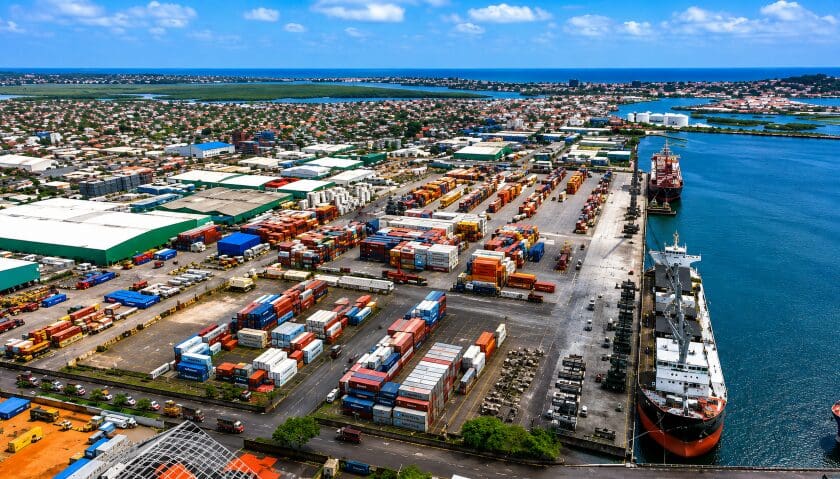
LIBERIA – Liberia has recently enacted two laws granting autonomy to its seaports and inland ports as the country moves to improve operational efficiency and reduce the cost of moving goods through ports.
The National Ports Authority’s 2025-2030 development plan, unveiled last October, includes US$550 million for port networks. The country has also recently awarded Marsa Maroc a concession to modernize two berths at the Port of Monrovia.
These efforts are beginning to be reflected in the operating performance of the country’s main port. In a World Bank ranking published in June 2026, Monrovia placed 38th out of 54 African ports, with relatively strong performance in vessel turnaround times.
Persistent Challenges and Regional Competition
However, operational efficiency depends on other factors. A U.S. Department of Commerce report published in 2024 cited high handling charges and corruption at the port. Those constraints have led some importers to turn to competing ports, including Conakry in Guinea.
However, recent data indicate that while vessel turnaround times have improved, many importers still prefer neighbouring countries because of these persistent logistical burdens.
In addition, weak inland transport infrastructure adds to those difficulties. In 2022, only 9% of Liberia’s road network was paved, according to the National Road Fund. The country’s rail network remains limited and is used mainly to transport iron ore.
As a result, a critically underdeveloped road network and limited rail systems continue to hinder the effective movement of goods into the interior.
Investment and Future Outlook
The recent extension of ArcelorMittal Liberia’s concession, which includes about US$800 million in investment in rail infrastructure and the port of Buchanan, has been presented as a catalyst for developing the country’s logistics network.
These reforms suggest that infrastructure upgrades alone cannot lower consumer prices without simultaneous improvements to inland transportation and governance.
Furthermore, Liberia’s case highlights a broader challenge facing many African coastal countries: major reforms and large-scale investments are underway to modernize and expand port infrastructure, but weak inland transport networks and governance shortcomings continue to create bottlenecks for shippers, operators and, ultimately, households.
Finally, these reforms suggest that infrastructure upgrades alone cannot lower consumer prices without simultaneous improvements in inland transportation and governance.
Sign up HERE to receive our email newsletters with the latest news and insights from Africa and around the world, and follow us on our WhatsApp channel for updates.