
Egypt bets on Dar es Salaam corridor to unlock East, Central African markets
For Egyptian exporters, Dar es Salaam provides access to seven landlocked markets.
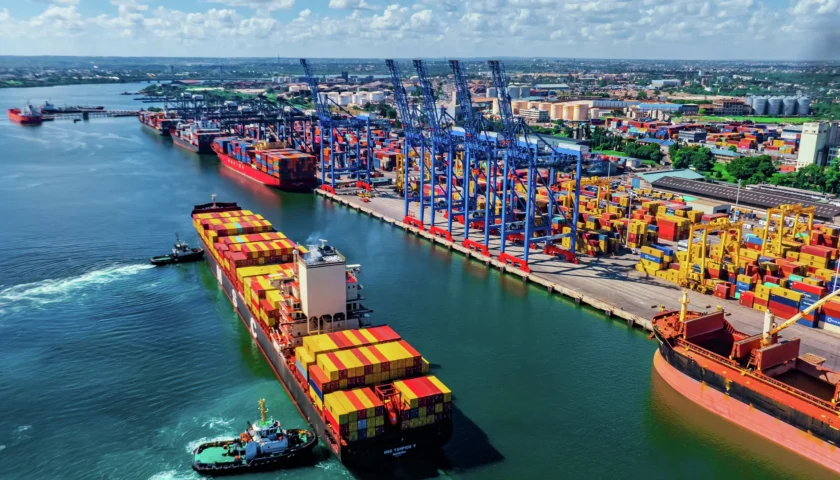
EGYPT – Egypt and Tanzania have begun talks on a multimodal transport corridor linking Egypt’s Red Sea ports to the Port of Dar es Salaam, as Cairo seeks to deepen its economic footprint across East and Central Africa, the Egyptian Ministry of Transport said.
Egyptian Transport Minister Kamel El-Wazir and Tanzanian Transport Minister Makame Mbarawa discussed the initiative on Monday, 5 October 2026.
The plan includes developing and operating a multipurpose terminal in Dar es Salaam through an Egyptian-Tanzanian consortium, establishing a regular maritime link between Sokhna, Safaga, and Dar es Salaam, and linking the railway networks on both sides.
A memorandum of understanding is expected to formalize the partnership.
Trade data and competitive positioning
The corridor push comes as Egypt’s trade with African Union countries reached US$6.1 billion in the first seven months of 2026, up 11.8% from US$5.5 billion a year earlier, according to the Central Agency for Public Mobilization and Statistics.
Egyptian exports rose 3.4% to US$4.5 billion, while imports from African countries increased by 45.5% to US$1.6 billion.
For Egyptian exporters, Dar es Salaam provides access to seven landlocked markets. For instance, Dar es Salaam already handles transit cargo for Rwanda, Burundi, Uganda and eastern DRC, competing with Mombasa and Beira.
Moreover, Dar es Salaam has attracted major investment, with DP World holding a 30-year concession and having invested more than US$123 million at Terminal 1 by April 2026.
Meanwhile, Egyptian firms have expanded across Africa through Elsewedy Electric’s 2.6-million-square-metre industrial city in Tanzania and the Arab Contractors-Elsewedy consortium delivering the 2,115 MW Julius Nyerere hydropower dam, according to the Egyptian Cabinet’s statement.
What determines success for the corridor
Three factors will determine whether this corridor moves beyond an MoU. First, the multipurpose terminal concession terms: who operates, under what tenure, and with what investment commitment.
Second, whether shipping lines commit to the Sokhna-Dar es Salaam service, since a maritime link without carrier demand will not generate volumes.
Third, whether the railway connection to landlocked markets is technically compatible, given gauge differences between Egyptian and East African networks.
Finally, the broader signal is Egypt’s shift from exporting goods to Africa to exporting logistics services, a higher-margin model that competes directly with Gulf and Turkish operators in those markets.
Sign up HERE to receive our email newsletters with the latest news and insights from Africa and around the world, and follow us on our WhatsApp channel for updates.