ATI, DP World secure 25-year Manila South Harbour concession to 2063
The concession runs from May 2038, meaning ATI’s current agreement remains in force for more than a decade before the renewal period begins.
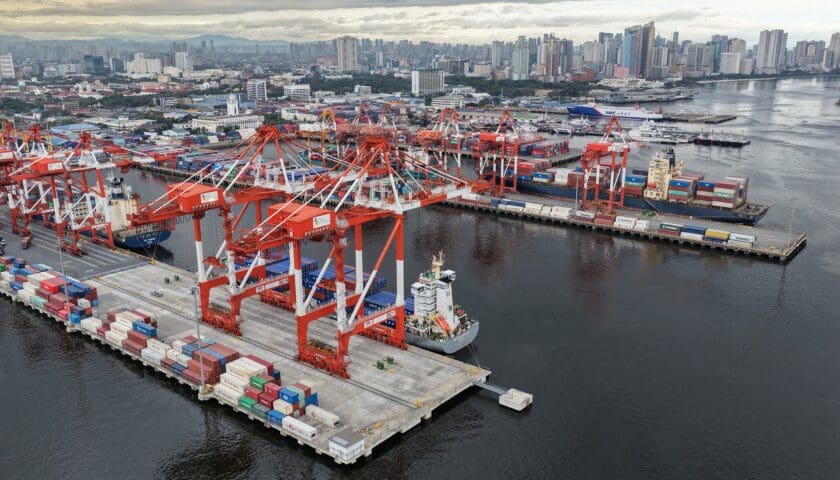
PHILIPPINES – Asian Terminals Inc. and its partner DP World have secured a 25-year renewal of their concession to operate and develop Manila South Harbour with the Philippine Ports Authority, running from May 2038 to May 2063, according to a joint statement.
The agreement coincides with ATI’s 40th anniversary.
Investment legacy and future capital allocation
Over four decades, ATI has invested more than Php42 billion (US$659.6 million) in developing and modernizing its Philippine port facilities.
Therefore, contributing to the movement of approximately 30 million TEUs of containers, 57 million metric tons of non-containerized cargo and 70 million passengers across its operations.
The renewal provides long-term certainty for continued modernization. Planned investments include capacity expansion, deployment of greener and more energy-efficient cargo-handling equipment, increased automation and advanced digital technologies.
Essa Kazim, Executive Chairman of DP World, said: “The Philippines has significant long-term growth potential and an important role to play in regional and global trade. Realising that potential requires sustained investment in world-class infrastructure that strengthens competitiveness and connects businesses to international markets.”
Jason Varsamis, CEO and Managing Director of DP World Asia Pacific, said: “Over four decades, ATI has played an important role in developing the infrastructure that supports Philippine trade, and this agreement provides the foundation to build on that legacy.”
Concession structure and operational context
The concession runs from May 2038, meaning ATI’s current agreement remains in force for more than a decade before the renewal period begins.
The structure gives the operator a planning horizon extending 37 years from the present, which supports capital allocation decisions on assets with multi-decade payback periods such as berths, cranes and yard automation.
Manila South Harbour handles international container traffic for the Philippine capital and serves as one of two major gateways alongside Manila North Harbour.
The port competes with Batangas and Subic for container volumes, and with regional transshipment hubs in Singapore and Malaysia for cargo connecting the Philippines to global markets.
The Php42 billion(approx. US$659.6 million) invested to date averages approximately Php1.05 billion (approx. US$16.5 million) per year over four decades, indicating a steady rather than a front-loaded capital programme.
The 30 million TEUs handled since 1986 represent an average annual volume of roughly 750,000 TEUs, well below the capacity of comparable Southeast Asian gateways, reflecting the size of the Philippine market and the fragmented nature of its port network.
Sign up HERE to receive our email newsletters with the latest news and insights from Africa and around the world, and follow us on our WhatsApp channel for updates.