
Asyad launches Duqm-Khalifa Port Green Corridor for Oman-UAE trade
The Duqm-Khalifa corridor is part of the broader expansion of Oman-UAE logistics connectivity in 2026.
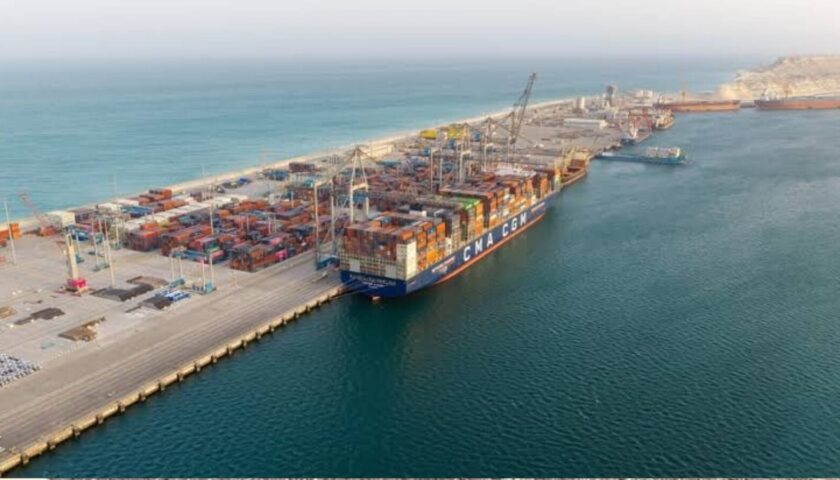
OMAN – Asyad Group has established the Duqm-Khalifa Port Green Corridor, a combined maritime and land route linking the Port of Duqm to Khalifa Port via the Khatmat Malaha border crossing and Al Ain Dry Port, according to a company statement.
The corridor is already handling weekly shipments via the Asyad Container Terminal at Duqm.
Route structure and cargo flow
Goods arriving at the Port of Duqm are transported via the Khatmat Malaha border crossing to Al Ain Dry Port, then to Khalifa Port in Abu Dhabi, from where they connect to distribution networks across the GCC markets.
Al-Khattab bin Salim al Ma’ani, Vice President of Commercial Affairs at Asyad Ports and Freezones, said global trade is undergoing rapid transformation, placing greater demands on supply chain flexibility, operational integration and speed-to-market.
He said the corridor strengthens the commercial connectivity ecosystem Asyad is developing by integrating port operations, land transport networks and cross-border logistics.
He noted that the route has seen growing demand and said the group continues to develop an integrated network of trade corridors linking Omani ports to maritime shipping routes, land transport networks and regional markets.
This is in addition to green corridors developed from the Port of Sohar, linking Oman to Gulf markets.
Operational context
The Duqm-Khalifa corridor is part of the broader expansion of Oman-UAE logistics connectivity in 2026.
In September, the Sharjah Ports, Customs and Free Zones Authority reported that its logistics corridor with Oman Customs handled approximately AED 1.7 billion (US$463 million) in cargo value in its first three months, with more than 34,000 truck movements.
Asyad Group has also advanced green mobility initiatives, signing agreements in 2026 for autonomous freight transport at the Port of Sohar and Salalah Free Zone.
The initiative is for green hydrogen offtake exceeding 91,000 kilograms annually for heavy-duty trucks, and for feasibility work on onshore power supply for vessels at ports.
The commercial logic rests on Duqm’s position outside the Strait of Hormuz, providing an alternative gateway that avoids transit through the strait.
Routing containers from Duqm overland to Khalifa Port allows Abu Dhabi-bound cargo to bypass the strait entirely, a route that has become more relevant as regional tensions disrupted Gulf shipping through 2026.
Sign up HERE to receive our email newsletters with the latest news and insights from Africa and around the world, and follow us on our WhatsApp channel for updates.