

US commits US$4.5M to Callao port design as Chancay competition grows
Callao faces competition from the Chinese-controlled Chancay port, about 80 kilometres north of Lima.
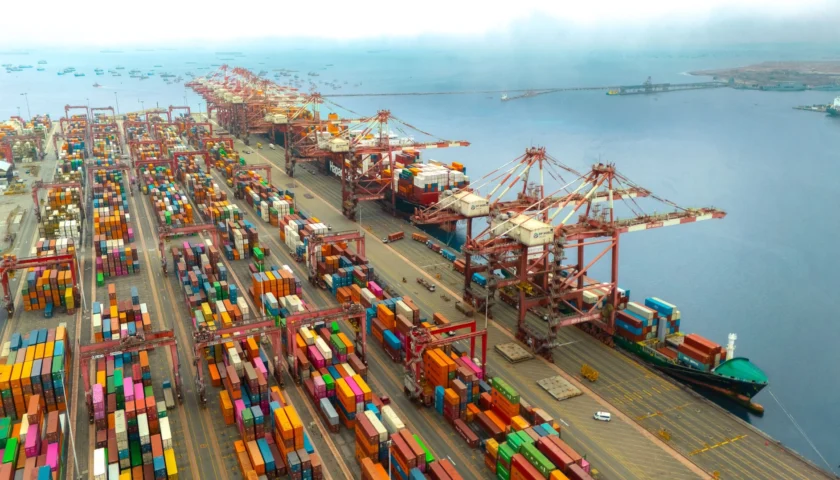
PERU – The United States has committed US$4.5 million to fund the design phase of an infrastructure programme at Peru’s Callao port, where the country plans to relocate its main naval base to free up space for expanded commercial operations, according to the State Department.
The funding came from previously allocated Foreign Military Financing resources and was announced following a visit to Peru and Colombia from 1 to 7 November by Thomas DiNanno, the State Department’s undersecretary for arms control and international security.
Project scope and financing structure
The commitment follows a January 2026 proposal in which Washington approved a potential US$1.5 billion sale of engineering, construction and logistics services for the relocation and modernization of the Callao naval base.
The Defense Security Cooperation Agency said the proposed sale would include engineering studies, construction management, maritime facilities and technical support, with up to 20 American government or contractor representatives assigned to Peru for up to 10 years.
Commercial competition and regulatory dispute
Callao faces competition from the Chinese-controlled Chancay port, about 80 kilometres north of Lima.
The US$1.3 billion facility, majority-owned by Cosco Shipping Ports, began commercial operations in June 2025 and provides direct connections to Asian markets, including Shanghai, with transit times of about 23 days.
Chancay handled more than 500,000 TEU in its first year of commercial operations. Between January and July 2026, it handled approximately 246,000 containers, up 74% year on year, according to figures cited by the Peruvian business newspaper Gestión.
Callao handled approximately 1.9 million containers in the same period.
In February 2026, Washington warned that Peru risked losing effective oversight of Chancay following a court ruling that restricted the country’s transport regulator from supervising certain operations at the terminal.
Peru’s port regulator, Ositran, announced plans to appeal, arguing that the ruling created an exception to the regulatory framework applied to other major ports.
China is Peru’s largest trading partner and a major buyer of mineral exports, particularly copper.
Meanwhile, the 1.9 million versus 246,000 container gap between the two ports over seven months reflects the commercial reality underlying the geopolitical framing.
Finally, Chancay offers direct routing to Asia, which shortens transit times for Peruvian exports, particularly agricultural produce and minerals for Chinese markets.
Sign up HERE to receive our email newsletters with the latest news and insights from Africa and around the world, and follow us on our WhatsApp channel for updates.
