

Moroccan tomato exports surge, pushing European prices lower
Further shipments are expected over the next two weeks as new crops ripen in the Souss-Massa region, potentially accelerating export volumes.
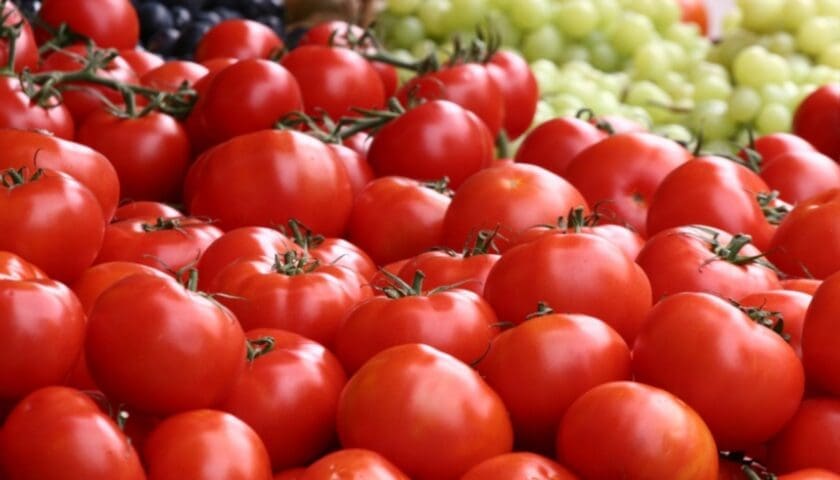
EUROPE – Moroccan tomato exports to European markets have increased in recent weeks, pushing prices down from €1.80 to €2 (US$2.07 to US$2.30) per kilogram to €1.10 to €1.30 (US$1.27 to US$1.50) per kilogram, according to a source at France’s Rungis International Market.
Slower sales have put pressure on traders, forcing some to lower prices to avoid losses on their produce and reducing expected profit margins.
Further shipments are expected over the next two weeks as new crops ripen in the Souss-Massa region, potentially accelerating export volumes.
For Moroccan exporters, the price decline reflects a familiar seasonal dynamic: supply arrives faster than European demand absorbs it, and traders discount to clear stock rather than hold perishable fruit.
The autumn-winter campaign generally runs from October through April under arrangements between Morocco and EU countries, but this year’s volumes are meeting a market already well supplied.
Higher temperatures have extended the availability of French tomatoes and Dutch cluster tomatoes, increasing competition with Moroccan and Spanish supplies during a period traditionally dominated by the two Mediterranean producers.
Climate fluctuations are gradually altering the seasonal distribution, with the Netherlands, Belgium and Poland typically taking a larger role during the spring-summer campaign but now remaining in the market longer.
On the domestic side, Agriculture Minister Khalid Hatimi says authorities must first identify the essential food products and quantities needed by the domestic market before making supplies available for export.
The ministry is tightening restrictions on tomato exports to African markets, with Hatimi stating that domestic food requirements must be assessed before allocating supplies for export.
Meanwhile, exports to Europe follow a more structured supply chain from farms to packaging facilities, subject to higher quality standards.
Chtouka Ait Baha remains Morocco’s main hub for greenhouse tomatoes destined for export, while areas including Doukkala rely more heavily on open-field cultivation, with crops ripening in summer to meet domestic demand after the greenhouse season ends.
In addition, open-field tomatoes are generally of lower quality than greenhouse-grown tomatoes, meaning the two production models serve different markets rather than competing directly.
Lastly, for European buyers, the price weakness may pass, but climate change is narrowing Morocco’s seasonal advantage and eroding the winter premium its greenhouse production once commanded.
Sign up HERE to receive our email newsletters with the latest news and insights from Africa and around the world, and follow us on our WhatsApp channel for updates.