Absa raises Newlyn Group financing to US$316.4M for logistics infrastructure
Durban remains Africa’s busiest container port and the country’s primary gateway for international trade.
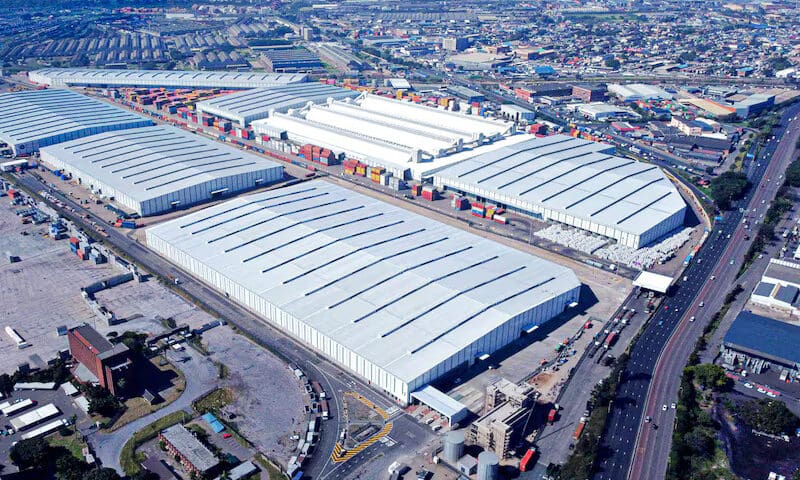
SOUTH AFRICA – Absa Corporate and Investment Banking has increased its financing facilities for logistics and industrial infrastructure developer Newlyn Group to R5.1 billion (approx. US$316.35 million), to fund rail-linked logistics parks, the bank said.
Newlyn focuses exclusively on infrastructure that improves the efficiency of national supply chains through logistics parks, multimodal freight facilities and port-related developments.
It owns and manages 32 logistics assets comprising more than 1.3 million square meters of gross lettable area, with a 24-hectare landbank.
Rail and port-linked developments
The Newlyn PX Bayhead Rail Terminal, adjacent to the Port of Durban, and its planned back-of-port logistics infrastructure in Coega are part of a strategy aligned with national freight logistics reforms and the government’s objective of shifting greater volumes from road to rail.
Absa said the investments are designed to develop integrated logistics ecosystems that connect ports, rail infrastructure and road networks into a single supply chain.
Road-to-rail shift
The bank noted that over the past decade, rising container traffic volumes have shifted to roads, putting pressure on the national road network, particularly along the Durban-Gauteng corridor.
As a result, logistics costs have risen, congestion has increased, road deterioration has accelerated, carbon emissions have risen, and safety risks have increased.
“Globally, successful logistics economies do not force road and rail to compete, but integrate them,” Absa said, adding that road transport should continue to perform first-mile and last-mile functions, while rail should become the backbone of long-distance freight movement, particularly for containerized cargo between Durban and the country’s industrial heartland.
Economic context
Durban remains Africa’s busiest container port and the country’s primary gateway for international trade. Absa said that continued reforms in the port and rail sectors, along with increased private-sector participation, present an opportunity to reposition South Africa as a competitive logistics hub.
The bank said public sector reforms are shaping the policy environment, specialist developers are delivering logistics infrastructure, and institutions are providing the long-term capital needed to accelerate delivery.
Lastly, this transaction reflects growing confidence in private-sector participation to drive long-term economic growth and infrastructure reform, with Absa maintaining a focus on financing catalytic infrastructure that unlocks economic activity and facilitates trade.
Sign up HERE to receive our email newsletters with the latest news and insights from Africa and around the world, and follow us on our WhatsApp channel for updates.