Published
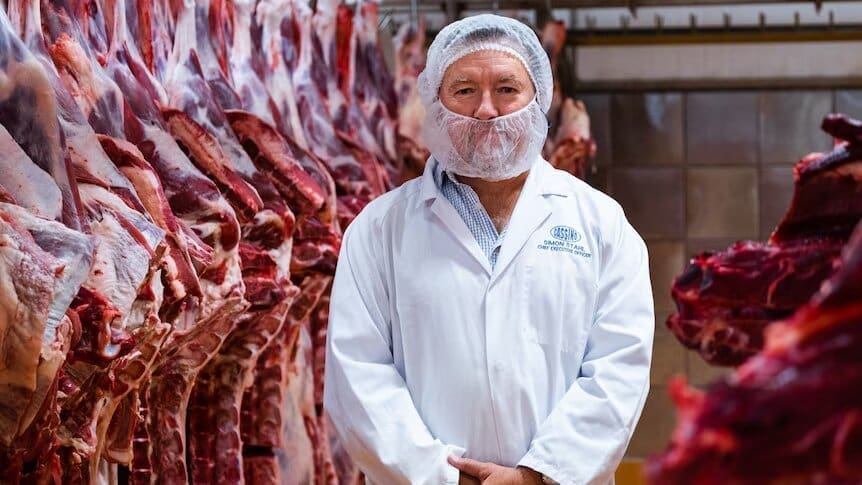
AUSTRALIA – China has recently lifted import suspensions on five of Australia’s beef processing plants, bringing the total number of unrestricted facilities to eight.
According to meat industry analyst Simon Quilty, the reinstated meatworks are the Kilcoy Pastoral Company, Meramist at Caboolture, the JBS-owned Beef City (near Toowoomba) and Dinmore (near Brisbane), and the Northern Cooperative Meat Company at Casino.
This move marks the latest step in China’s gradual relaxation of restrictions imposed on Australian exports in 2020.
The initial measures were seen as retaliation for Australia’s push for an international investigation into the origins of COVID-19.
While celebrating the progress, Australian officials remain cautious.
Agriculture Minister Murray Watt, in a joint statement with his trade counterpart, urged China to remove all remaining trade barriers, including those affecting Australia’s rock lobster industry.
This news comes alongside a similar development for Ireland.
China recently agreed to resume imports of Irish beef, following a brief suspension due to a single case of Mad Cow Disease.
This incident resulted in a halt in exports just months after Ireland had secured a resumption of trade following a previous ban in 2020.
In 2023, Australia achieved a record-breaking export of red meat, totaling 1.84 million shipped weight tonnes to over 100 countries, with a value of A$17.08 billion (US$11.34B) for the year ending in November.
Mainland China remained the top destination, importing 206,193 tonnes of beef and 165,245 tonnes of lamb and mutton.
The demand in China is expected to grow, driven by the expanding affluent consumer base and a rising appreciation for high-quality red meat.
The United States, however, continues to be a significant market for Australian grass-fed beef and lamb.
For Australia, the main opportunity in the US lies in enhancing the value of exports through premium products like chilled grass-fed beef and lamb, rather than merely increasing the volume of consumption.
Liked this article? Subscribe to Food Business Africa News, our regular email newsletters with the latest news insights from Africa and the World’s food and agro industry. HERE
No related posts.
We use cookies to improve your experience on our site. By using our site, you consent to cookies.
Manage your cookie preferences below:
Essential cookies enable basic functions and are necessary for the proper function of the website.
These cookies are needed for adding comments on this website.
Google's current Sign in with Google client library. It renders the Google sign-in button, or the One Tap prompt, so visitors can log in to your site with their Google account. It replaces the older Google Sign-In platform library.
Service URL: policies.google.com (opens in a new window)
Google Tag Manager simplifies the management of marketing tags on your website without code changes.
Statistics cookies collect information anonymously. This information helps us understand how visitors use our website.
Google Analytics is a powerful tool that tracks and analyzes website traffic for informed marketing decisions.
Service URL: policies.google.com (opens in a new window)
WPMU DEV Analytics is the visitor statistics feature of the WPMU DEV Dashboard plugin. It reports traffic and visitor behavior inside The Hub using a Matomo analytics instance hosted by WPMU DEV.
Service URL: wpmudev.com (opens in a new window)
Marketing cookies are used to follow visitors to websites. The intention is to show ads that are relevant and engaging to the individual user.
AddToAny provides share and follow buttons that let visitors post your pages to social networks, messaging apps, and bookmarking services.
Service URL: www.addtoany.com (opens in a new window)