Brazil cattle trades stays flat – Cepea
Packers relying on own supply; Indonesia increases approvals for beef imports
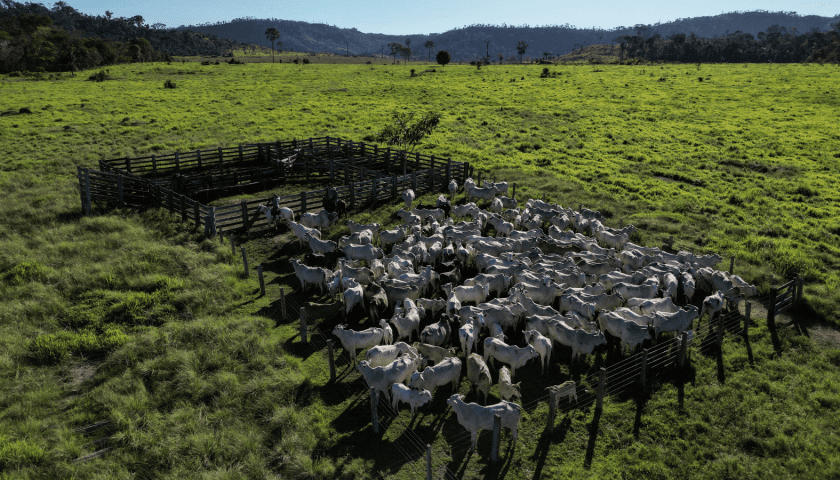
BRAZIL – Trades in Brazil’s cattle market are holding steady through mid-September, according to data from Cepea.
Meatpackers are prioritizing contracted herds and their own supplies, limiting the need to source cattle through spot purchases.
This situation has left farmers selling in smaller volumes, and overall trading activity has remained subdued.
The CEPEA/ESALQ Index for finished cattle in São Paulo ended at US$55.92 (BRL 307.90) on September 15, representing a 0.84 percent decline from the close on August 29.
Brazil’s beef exports fell in August, totaling 295,230 tons, a 5 percent drop compared with July’s record 310,210 tons, according to Secex data.
China continued as the largest buyer, accounting for 158,057 tons, or just over half of the total shipped volume.
Meanwhile, Russia surpassed the United States to become Brazil’s second-largest export destination in August, purchasing 14,300 tons.
Indonesia expands approvals
At the same time, Indonesia has cleared 17 additional Brazilian meatpacking facilities to supply beef, bringing the total number of approved plants to 38.
The latest authorization includes operations across several states, with six located in Mato Grosso, two in Rio Grande do Sul, two in Minas Gerais, two in Goiás, two in Mato Grosso do Sul, two in Rondônia and one in São Paulo.
Brazil’s Ministry of Agriculture and Livestock confirmed that Indonesia’s decision extends beyond standard cuts to include beef with bone, offal, processed meat and prepared beef products.
The development comes as beef consumption in Indonesia continues to rise, supported by income gains and an expanding urban middle class.
Between January and August 2025, Brazilian beef exports to Indonesia reached 15,400 tons valued at US$71.6 million, a sharp increase from 2,600 tons worth US$11.5 million in the whole of 2024.
This represents growth of 253 percent in volume and 258.9 percent in value over the same period last year.
According to the Brazilian Association of Meat Exporting Industries, the approvals were the result of coordinated efforts involving the Ministry of Agriculture, the Ministry of Foreign Affairs, the Ministry of Development, Industry, Commerce and Services, and the Brazilian Trade and Investment Promotion Agency.
The association’s president, Roberto Perosa, said cooperation between private companies and government institutions has been central to securing the new access.
Sign up HERE to receive our email newsletters with the latest news and insights from Africa and around the world, and follow us on our WhatsApp channel for updates.