
Global schedule reliability rises to 50.6% in September as Maersk leads
On a year-on-year basis, none of the 13 carriers improved their reliability.
GLOBAL – Global liner schedule reliability rose 0.9 percentage points to 50.6% in September 2026, following three monthly declines that cut 14.8 points from May’s 64.5% peak, according to Sea-Intelligence.
The average delay for late vessel arrivals fell 0.30 days month on month to 6.65 days, though that figure remains the second-highest for September on record.
Carrier performance
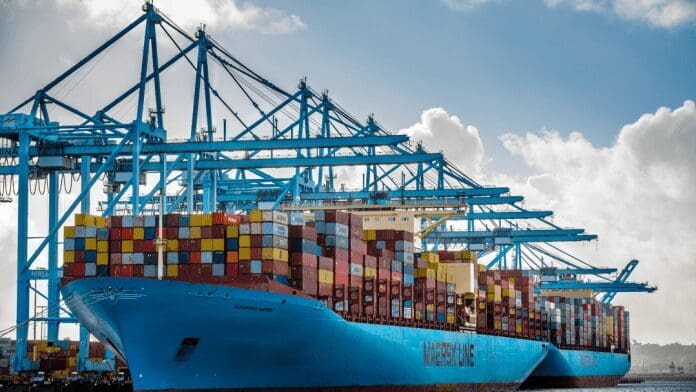
Maersk was the most reliable of the top 13 carriers in September, with a reliability of 64.8%, followed by Hapag-Lloyd at 60.4%, MSC at 57.7% and CMA CGM at 51.8%.
Wan Hai was the least reliable carrier, with a 26.7% rate.
Ten carriers recorded month-on-month improvements, with ZIM posting the largest gain of 4.7 percentage points. Maersk recorded the largest monthly decline of 1.8 percentage points.
On a year-on-year basis, none of the 13 carriers improved their reliability.
PIL recorded the largest annual decline, at 27.3 percentage points, and was one of twelve carriers to post double-digit year-on-year drops.
Alliance performance and market context
For August and September combined, MSC was the most reliable alliance at 68.9%, followed by Gemini at 68.4% and Ocean Alliance at 44.8%. Premier Alliance was the least reliable at 41.5%.
The 14.8-point decline from May’s peak reflects conditions affecting carriers across trade lanes.
For instance, Asian port congestion reached 4.3 million TEU in September, exceeding the pandemic peak of 4.0 million TEU, according to Linerlytica, as carriers absorbed effective capacity by extending vessel cycles.
Moreover, Red Sea diversions continued to absorb 5% to 7% of global container capacity.
The absence of any year-on-year improvement across all 13 carriers indicates that September’s monthly gain marks a pause in deterioration rather than a recovery to 2025 levels.
The alliance figures carry a similar implication. MSC and Gemini, operating at nearly 69% reliability, contrast sharply with Ocean Alliance and Premier Alliance at 44.8% and 41.5% respectively.
Shippers routing cargo through alliance services face materially different transit reliability depending on which grouping operates the vessel, a factor that affects contract terms and port selection.
Ultimately, recovery to the May peak of 64.5% would require sustained improvement over consecutive months rather than a single monthly gain, and would depend on whether Asian congestion eases and Red Sea routings normalize through the fourth quarter.
Sign up HERE to receive our email newsletters with the latest news and insights from Africa and around the world, and follow us on our WhatsApp channel for updates.