

Korea opens its first land-based salmon farm
The facility aims to reduce reliance on imports by producing Atlantic salmon locally. Eco Aquafarm’s closed-loop system is expected to cut marine pollution and improve water use efficiency
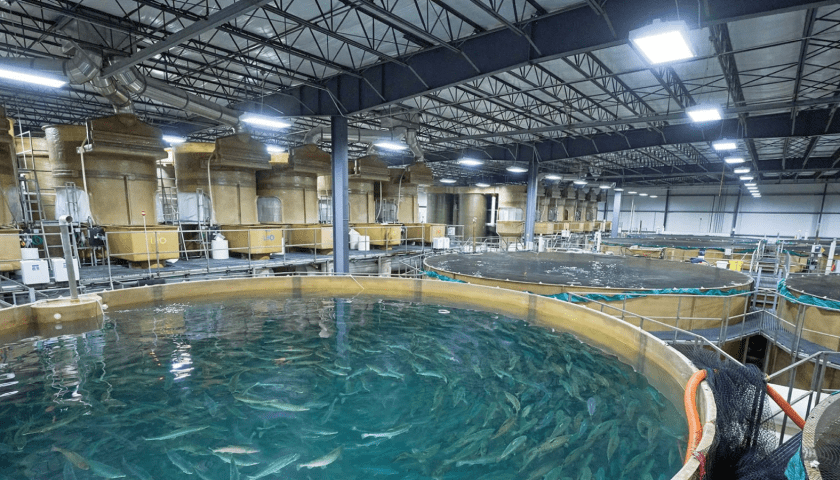
SOUTH KOREA – South Korea is moving forward with its plans to reduce seafood imports by opening the country’s first land-based Atlantic salmon farm in Busan.
The facility has been established by GS Engineering and Construction and is run by its aquaculture subsidiary, Eco Aquafarm.
Designed to produce 500 tonnes of salmon annually, the site marks the beginning of efforts to introduce a local supply of the fish, which has previously been fully imported.
Initial egg stocking took place in late 2024, with the first harvest projected to take place in the last quarter of 2026 after a two-year growing period.
Located at the Fisheries Science Institute within Pukyong National University in Gijang-gun, the project is part of the government’s Smart Aquaculture Cluster Development Project.
This national initiative, led by the Ministry of Oceans and Fisheries, aims to modernise the aquaculture industry by incorporating digital tools and automation.
The Busan facility is the first in the country to adopt a closed-loop water filtration system, allowing it to reuse up to 99 percent of its water and limit the environmental footprint.
Norway-based AKVA Group supplied the water treatment technology, which is intended to reduce the release of waste into nearby marine environments.
The farm spans two floors and is equipped with systems that digitally monitor water quality, fish condition, and operational metrics in real time.
Eco Aquafarm is using the current 500-tonne production level as a pilot phase to test and refine its operations before scaling up.
Plans for a second phase are already underway, which would increase production to 5,000 tonnes annually and open investment opportunities to foreign partners.
According to Business Development Manager Sang-Jun Dong, the expansion would place the company in the international marine plant industry, backed by GS E&C’s experience in large-scale infrastructure projects.
While the exact value of the project has not been disclosed, the investment is expected to support a growing shift toward sustainable and technologically driven fish farming in the region.
If successful, the initiative could reduce South Korea’s dependence on imported salmon, which currently accounts for the entire domestic supply.
The second phase is expected to proceed based on data collected during the current production cycle, setting the stage for a larger-scale operation with broader market reach.
Sign up HERE to receive our email newsletters with the latest news and insights from Africa and around the world, and follow us on our WhatsApp channel for updates.

