
Meat prices drive up food inflation in South Africa
Food inflation slows slightly but remains under pressure from high meat costs

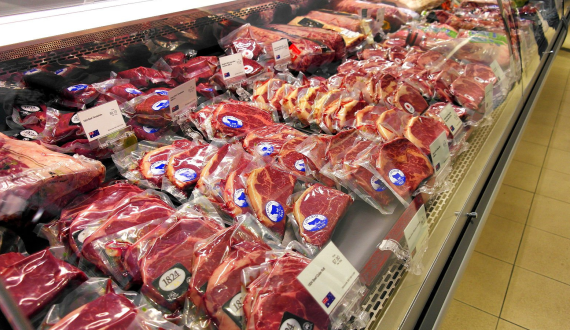
SOUTH AFRICA – Meat prices remain the biggest driver of South Africa’s food inflation, with annual inflation in the category rising to 11.3% in August 2025, its sharpest pace in two and a half years.
Although there was a slight monthly slowdown from 3.3% in July to 0.4% in August, the broader impact of high meat costs has kept overall food inflation elevated despite easing in other categories.
The surge has largely been linked to recurring foot-and-mouth disease outbreaks, which have disrupted slaughter patterns and limited supply, though an export ban temporarily boosted domestic availability.
Chicken imports, which could have helped ease prices, have remained low, with July volumes down by 34.9% month-on-month and 70.9% year-on-year to 10,543 tonnes, leaving cumulative imports for the year down 30.2% at 176,703 tonnes.
Traders note that the irregular outbreaks of foot-and-mouth disease continue to inject uncertainty into the market, causing volatility in prices and keeping pressure on household spending.
Overall Food Inflation Slows Slightly
Despite the strain from meat, overall food inflation eased to 5.2% year-on-year in August from 5.5% in July, supported by softer prices in cereals, fruits, nuts, vegetables, and dairy products.
On a monthly basis, food prices declined by 0.8% in August, reflecting a sharper drop in cereals and vegetables.
Cereal Prices Decline on Larger Harvests
Cereal inflation dropped to 1.5% in August, down from a peak of 4.8% in April, marking four straight months of moderation.
The decline followed an upward revision in the 2024/25 summer harvest estimate to 19.55 million tonnes, 25.9% higher than last year and just 2.6% below the record output of 2022/23.
A firmer rand also weighed on prices, with white maize averaging US$237.40 (R4,433/t) and yellow maize US$210.70 (R3,931/t), representing year-on-year declines of 17% and 3% respectively.
Outlook
Looking ahead, analysts expect improved seasonal production in the 2025/26 crop cycle and a stronger rand to ease pressure on food prices, although meat costs are likely to remain volatile due to persistent disease risks and import shortfalls.
Sign up HERE to receive our email newsletters with the latest news and insights from Africa and around the world, and follow us on our WhatsApp channel for updates.