
Published
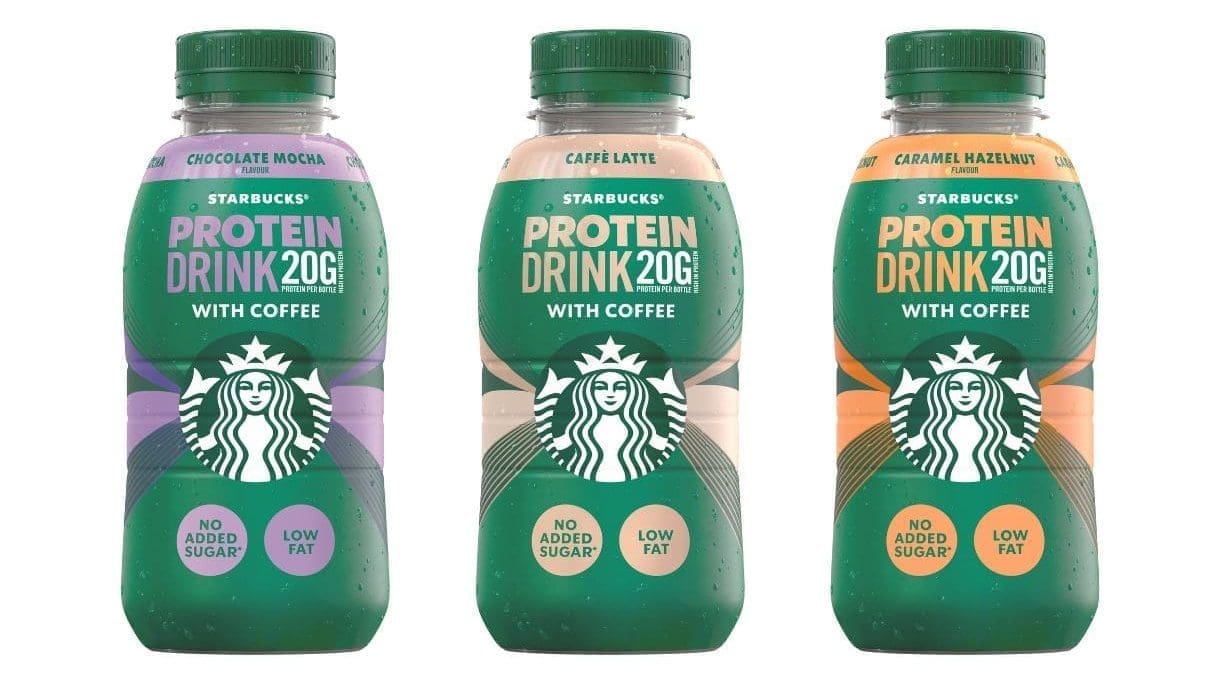
UK – Starbucks, the American multinational coffeehouse chain, has expanded its ready-to-drink portfolio with the introduction of the Starbucks Protein Drink with Coffee.
This new offering, available in three flavors, aims to cater to consumers with active lifestyles by providing a high-protein beverage option.
The Starbucks Protein Drink with Coffee range features 20 grams of protein per bottle and is made with low-fat milk and zero added sugar.
The flavors available are Caffe Latte, Chocolate Mocha, and Caramel Hazelnut.
Adam Hacking, head of beverages at Arla, highlighted the product’s appeal to both existing protein drink consumers and new shoppers.
“Our new venture into the protein drinks space brings the delicious Starbucks taste to a high-protein beverage,” said Hacking.
“By appealing to existing protein drinkers as a trade-up opportunity and by tapping into the penetration opportunity for new shoppers, Starbucks Protein Drink with Coffee will continue to drive growth in the milk-based beverage category.”
The new drinks come in 330ml bottles and are available in major UK retailers for £2.75 (US$3.00).
Hacking emphasized the significance of the launch by noting that the introduction of three flavors at once underscores Starbucks’ commitment to providing consumers with diverse choices.
In addition to the new product launch, Starbucks has announced a partnership with Grubhub to deliver coffee and other customized beverages in select U.S. markets starting this month.
This move aims to extend Starbucks’ reach as inflation-weary customers increasingly prefer to dine at home.
Meg Mathes, Vice President of Digital Experiences at Starbucks, stated, “Our new partnership with Grubhub will help fuel this growth by increasing availability of Starbucks products to Grubhub’s tens of millions of customers.”
Despite these expansions, Starbucks continues to face challenges in its two largest markets, the U.S. and China.
In April, the company reduced its annual sales forecast following a decline in same-store sales for the first time in nearly three years, attributed to weak demand in these key regions.
Liked this article? Subscribe to Food Business Africa News, our regular email newsletters with the latest news insights from Africa and the World’s food and agro industry. HERE
No related posts.
We use cookies to improve your experience on our site. By using our site, you consent to cookies.
Manage your cookie preferences below:
Essential cookies enable basic functions and are necessary for the proper function of the website.
These cookies are needed for adding comments on this website.
Google's current Sign in with Google client library. It renders the Google sign-in button, or the One Tap prompt, so visitors can log in to your site with their Google account. It replaces the older Google Sign-In platform library.
Service URL: policies.google.com (opens in a new window)
Google Tag Manager simplifies the management of marketing tags on your website without code changes.
Statistics cookies collect information anonymously. This information helps us understand how visitors use our website.
Google Analytics is a powerful tool that tracks and analyzes website traffic for informed marketing decisions.
Service URL: policies.google.com (opens in a new window)
WPMU DEV Analytics is the visitor statistics feature of the WPMU DEV Dashboard plugin. It reports traffic and visitor behavior inside The Hub using a Matomo analytics instance hosted by WPMU DEV.
Service URL: wpmudev.com (opens in a new window)
Marketing cookies are used to follow visitors to websites. The intention is to show ads that are relevant and engaging to the individual user.
AddToAny provides share and follow buttons that let visitors post your pages to social networks, messaging apps, and bookmarking services.
Service URL: www.addtoany.com (opens in a new window)