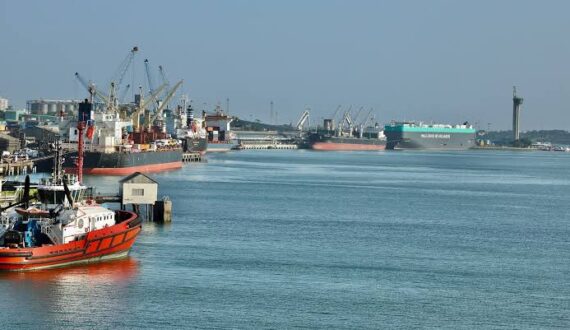

UAE expands ports, railways, airports network as global trade platform
The UAE’s physical infrastructure is increasingly supported by digital tracking and logistics platforms that enable cargo rerouting and emergency coordination.
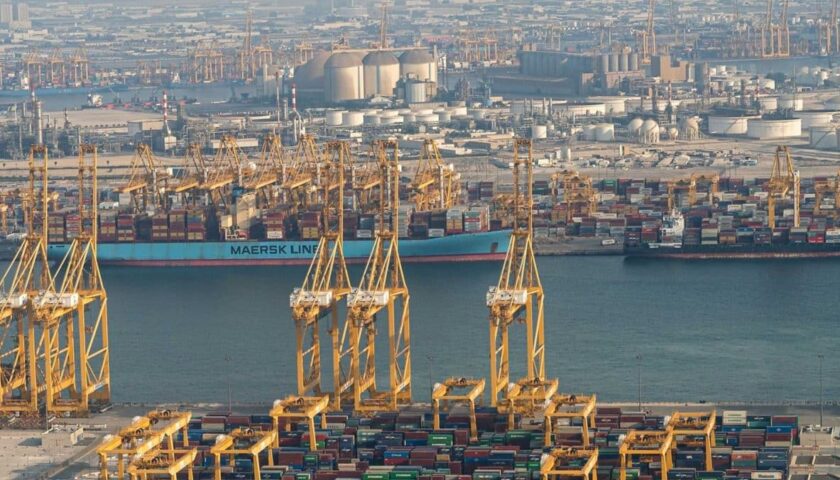
UAE – The United Arab Emirates has expanded its integrated logistics network, spanning ports, railways, airports, roads and free zones, as the country strengthens its position as an end-to-end platform for global trade and supply chains.
The country’s logistics strategy increasingly links manufacturing and storage facilities directly to ports, airports and border crossings, enabling cargo to be moved, stored, rerouted and re-exported across multiple transport modes.
Additionally, regional developments are accelerating the integration of the UAE’s transport infrastructure.
UAE-Oman Logistics Corridor and Rail Expansion
The Sharjah Ports, Customs and Free Zones Authority, in coordination with Oman Customs, recently established a logistics corridor linking Sharjah’s coastal ports with ports in Oman.
The network includes Khorfakkan, which aims to reach a future capacity of 10 million containers, and the Omani ports of Sohar, Duqm and Salalah. Sharjah is also developing the Al Dhaid Logistics Complex, spanning more than 16 million square feet and with an initial capacity of 1.5 million twenty-foot equivalent units (TEUs).
Meanwhile, rail freight is adding another cross-border connection. Hafeet Rail signed contracts in February 2025 to design and build railway facilities in Oman. Its freight operations span 11 terminals, connecting major industrial hubs and ports, including Khalifa Port and Jebel Ali.
Air Freight and Multimodal Connectivity
Air freight infrastructure is also being expanded through the Abu Dhabi Airports Free Zone. The free zone includes the 8.3-million-square-metre Al Falah Logistics Park, and the East Midfield cargo terminal is set to handle 1.5 million tonnes annually upon completion in 2027.
Dubai’s logistics infrastructure integrates two of the emirate’s major transport assets via the Dubai Logistics Corridor, linking sea freight at Jebel Ali Port with air freight at Al Maktoum International Airport.
Jebel Ali Free Zone (Jafza) attracted AED854 million (US$232.5 million) in new investment in the first four months of 2026, expanding facilities across manufacturing, logistics, healthcare and food production.
Digital Infrastructure and Economic Impact
Moreover, the UAE’s physical infrastructure is increasingly supported by digital tracking and logistics platforms that enable cargo rerouting and emergency coordination.
In 2026, ADDED expanded its partner network to more than 30 logistics operators, supporting real-time cargo rerouting and emergency response coordination.
Finally, this strategic expansion highlights the country’s commitment to economic diversification and long-term industrial growth.
Sign up HERE to receive our email newsletters with the latest news and insights from Africa and around the world, and follow us on our WhatsApp channel for updates.