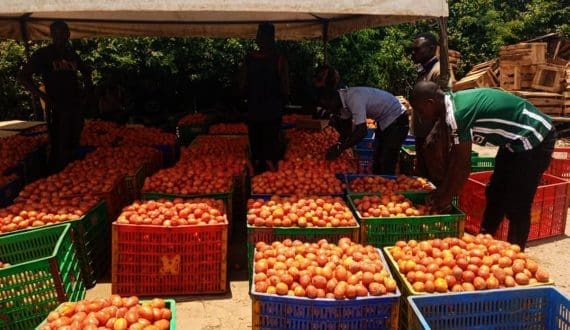
Tunisia’s 2025 tomato harvest set to drop 15% as downy mildew spreads
Recent rainfall and fast-spreading mildew put pressure on producers as yield drops take hold

TUNISIA – Industrial tomato farmers in Tunisia are facing a serious setback as fungal disease spreads across key production areas, threatening a crop that plays a vital role in the country’s economy.
The World Processing Tomato Council (WPTC) recently forecast that Tunisia’s 2025 harvest will reach 850,000 tons. This figure marks a 15% drop from the 1 million tons harvested in 2024.
The decline has been linked to recent episodes of tomato downy mildew, a fast-acting fungal disease made worse by heavy rains and waterlogged soil.
“Recent rainfall has caused waterlogging of the soil, disrupting the treatment schedule,” the WPTC noted in a statement on May 30.
Although the WPTC did not officially name the disease, sources in the sector have identified it as tomato downy mildew, caused by Phytophthora infestans. This fungus can wipe out entire tomato fields in a matter of days if left untreated.
It causes brown spots on leaves, stems and fruits, which later rot, leaving farmers with no marketable yield.
In Nabeul, Tunisia’s main tomato producing region, the spread of the disease has already led to serious losses.
“In the region, the spread of mildew has caused damage ranging from 20 to 70% of the harvest,” said Mohamed Ben Hassan, secretary general of the Regional Federation of Tomato Producers in Nabeul, speaking to Tunis Afrique Presse (TAP) on June 1. “This has resulted in a 33% drop in yields to 40 tons per hectare.”
Based on current trends, tomato output in Nabeul could fall to 240,000 tons this season, representing a 40% decrease.
Tomatoes are Tunisia’s fifth most valuable agricultural export, behind olive oil, dates, fish products and other edible oils. In 2024, tomato exports earned 246 million dinars (about US$83.4 million), according to the National Observatory of Agriculture (Onagri). This year’s reduced harvest could affect processors, exporters and farming communities alike.
Regional concerns over tomato crop health
The issue is not limited to Tunisia. Other African countries are also seeing outbreaks of crop-damaging pests.
In Nigeria, a major infestation of Tuta absoluta, also known as the Tomato Leaf Miner, began in March 2025 and has had serious effects on the market. The pest can destroy a farm in just 48 hours. Farmers in Nigeria have dubbed it “Tomato Ebola.”
Prices have surged as a result. A 50kg basket of tomatoes now sells for ₦30,000 (US$18.88), up from between ₦5,000 and ₦10,000 (US$3.15 to US$6.30) before the outbreak.
Farmers say the combination of high temperatures and wet soil has helped the pest spread quickly. Though efforts are underway to manage it using integrated methods, progress remains slow.
Kenyan farmers have also struggled with Tuta absoluta in recent years, particularly in areas that rely heavily on tomatoes. One major concern has been resistance to common pesticides, which limits control options.
The situation across North and West Africa is putting pressure on the tomato supply chain. Without timely support and better disease management, growers and buyers could face another difficult season.
Sign up HERE to receive our email newsletters with the latest news and insights from Africa and around the world, and follow us on our WhatsApp channel for updates.