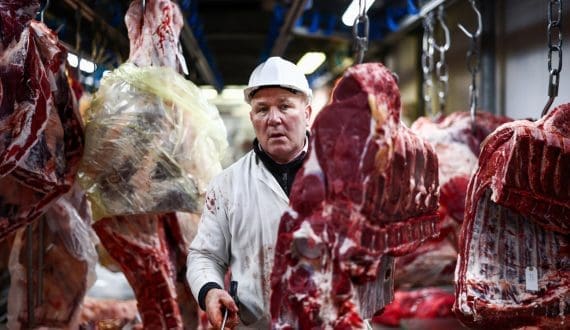
Namibia sees 25% drop in cattle marketing while pig slaughtering rises 6%
Goat marketing experiences modest growth despite lower monthly figures.
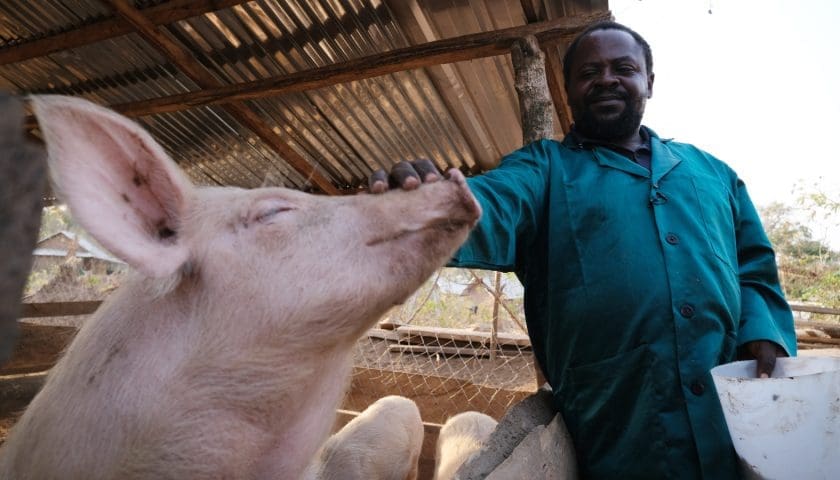
NAMIBIA – Local abattoirs in Namibia processed 4,655 pigs in October 2025, marking a 6.08% increase compared to the same month last year, according to the Livestock and Livestock Products Board of Namibia (LLPBN).
The figure represents a month-on-month decline of 4.53% from the 4,876 pigs slaughtered in September 2025.
Mariental and Halooli abattoirs accounted for the bulk of slaughtering, handling 3,174 and 1,329 pigs, respectively, with no live pig exports recorded during the period.
Meanwhile, cattle marketing fell significantly, dropping from 21,712 in October 2024 to 16,338 in October 2025, a 25% decline.
Live cattle exports fell sharply by 44.62% year-on-year, with South Africa remaining the primary destination, absorbing 96.16% of shipments.
In comparison, smaller volumes went to the Democratic Republic of Congo (2.31%) and Botswana (1.53%).
Sheep marketing also declined, decreasing 26.51% from 42,288 sheep in October 2024 to 31,076 in October 2025, with live exports falling by 21.16% over the same period.
Export-abattoir processing of sheep rose by 16.20% year-on-year, while B&C class abattoirs recorded a 60.22% reduction, processing only 4,060 sheep compared to 10,207 the previous year.
South Africa continued to dominate live sheep exports, taking 96.64% of total shipments, followed by Zambia (1.41%), Zimbabwe (1.15%), Botswana (0.70%), and Angola (0.10%).
Sheep in Namibia are now mainly of breeds raised for mutton production, replacing the karakul sheep that were historically bred for their lamb pelts.
Goat marketing in October saw a modest increase of 2.40%, rising from 11,438 in 2024 to 11,713 in 2025, with live exports also up 2.66% year-on-year to 11,699 goats.
However, the monthly comparison shows a 13.83% decrease in goat exports compared to September 2025, with South Africa receiving 94.98% of live goats, followed by Angola (1.98%), Zambia (1.41%), Zimbabwe (1.01%), and Botswana (0.62%).
Agriculture supports roughly 70% of Namibia’s population, mainly through subsistence farming, and contributes about 5.1% to the national GDP, of which livestock accounts for the majority of output.
Animal products, live animals, and crop exports collectively account for approximately 10.7% of Namibia’s total export earnings, providing an essential source of foreign exchange.
Cattle farming is concentrated in central and northern regions, while sheep and goat rearing dominate the arid southern areas, and subsistence cultivation of millet, sorghum, corn, and peanuts is mainly practiced in communal northern lands.
Sign up HERE to receive our email newsletters with the latest news and insights from Africa and around the world, and follow us on our WhatsApp channel for updates.