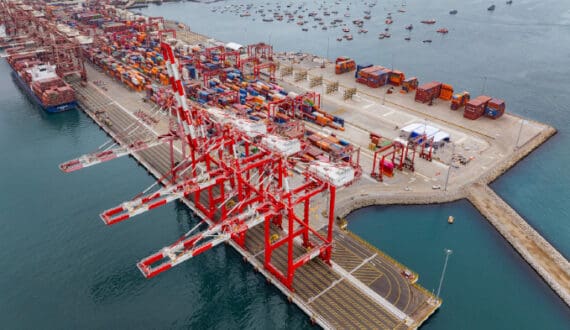

Tema Port Terminal 3 faces congestion as 70% of containers undergo physical inspections
Tema’s logistics challenges stand in stark contrast to its regional competitors.
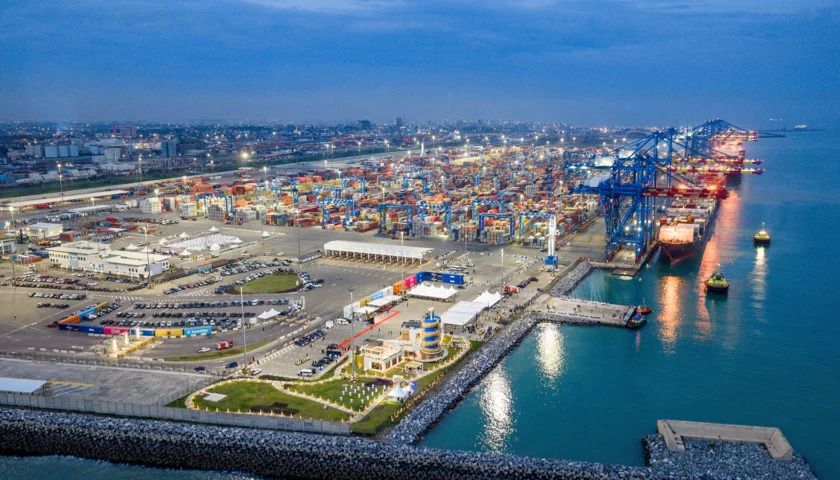
GHANA – Tema Port’s Terminal 3, which has already handled 2.5 million TEUs in 2026, is facing congestion as 70% of containers undergo full physical inspections, seven times the 10% rate recommended by the World Customs Organization (WCO), according to a Ghana Shippers Authority (GSA) assessment report.
The facility, which opened in 2019 after a US$1.5 billion investment, can handle 3 million TEUs annually and accommodate vessels carrying up to 24,000 TEUs. It has already handled 2.5 million TEUs in 2026, before the peak season.
Despite this capacity, cargo clearance times continue to extend, creating bottlenecks that undermine the terminal’s efficiency.
Customs inspections and financial penalties
Customs remains the most visible bottleneck. Seven out of every 10 containers undergo full physical inspections.
Excessive inspections have imposed severe financial penalties on businesses. The cement industry incurred demurrage charges of between US$45 million and US$50 million over eight months.
For instance, petroleum product distributors paid US$44 million to shipping companies in the first half of 2025. Businesses passed these additional costs on to final consumers.
Moreover, the over-reliance on manual inspections far exceeds international standards and delays cargo clearance. This congestion is further exacerbated by a lack of diverse inland transportation, as the port relies on a single road and lacks a functional rail link.
Competition from regional ports
Lomé and Abidjan, which target the same hinterland, are capturing some of the cargo flows that Tema struggles to process efficiently. Tema’s logistics challenges stand in stark contrast to its regional competitors.
Meanwhile, Abidjan has an established rail connection to its hinterland, while Lomé benefits from more efficient customs procedures and diversified inland transport options.
As a result, authorities are considering changes to customs risk classifications, stronger penalties and better coordination among agencies. These measures could help, but they will not solve the problem on their own.
Therefore, to remain competitive against neighbouring regional ports, Ghana must balance its massive seaside investments with improvements to onshore infrastructure and administrative efficiency.
Investment in the quay will deliver its full benefits only if roads, inland depots, and customs procedures improve at the same pace as the terminal’s capacity.
Evidently, the terminal’s physical prowess is ineffective if the surrounding logistics chain fails to keep up.
Sign up HERE to receive our email newsletters with the latest news and insights from Africa and around the world, and follow us on our WhatsApp channel for updates.