
TNPA begins US$22.5M road rehabilitation at Richards Bay
Winnie Mpanza, acting Port Manager at Richards Bay, said the investment demonstrated TNPA’s commitment to developing and maintaining port infrastructure to support trade.
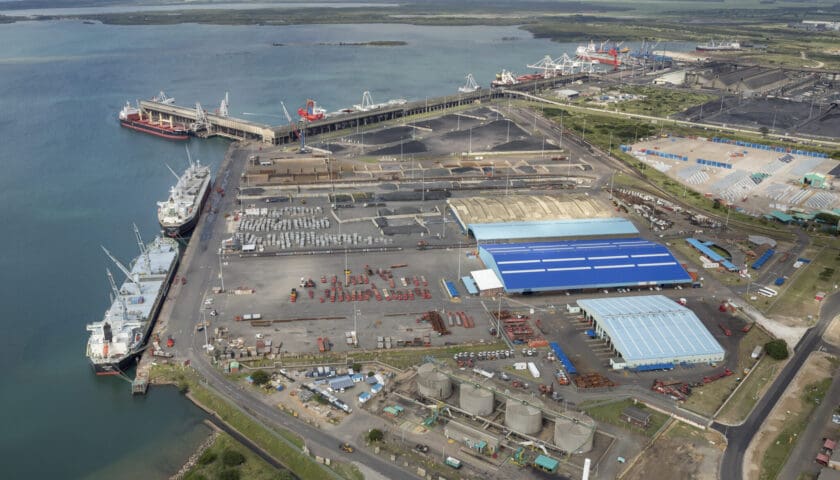
SOUTH AFRICA – Transnet National Ports Authority has commenced a R375 million (US$22.5 million) road rehabilitation programme at the Port of Richards Bay, covering Urania Road, Newark Road and Ventura Road, according to a company statement.
The 18-month project commenced in October 2026 and is part of TNPA’s wider infrastructure renewal programme, supporting Transnet’s Reinvent for Growth strategy.
Infrastructure scope and traffic impact
The work includes pavement strengthening, road widening, concrete surfacing, drainage and stormwater improvements, and road-safety enhancements.
Increased heavy-vehicle traffic in recent years has accelerated wear on these roads, which provide access to major terminals and operational facilities.
Once completed, the improvements are expected to increase road capacity, improve road conditions, reduce truck turnaround times and enhance operational reliability.
Winnie Mpanza, acting Port Manager at Richards Bay, said the investment demonstrated TNPA’s commitment to developing and maintaining port infrastructure to support trade.
She added that the rehabilitation would improve safety, meet port users’ needs and support future growth and investment.
Economic participation and strategic context
The project is expected to create about 72 jobs during construction, supporting skills development and local economic participation.
For logistics operators, the commercial significance lies in the specific roads being upgraded.
For instance, Urania, Newark and Ventura Roads serve the terminals handling coal, bulk cargo and breakbulk freight at Richards Bay, South Africa’s principal bulk export gateway.
Pavement deterioration on these access routes forces trucks to reduce speed and increases vehicle maintenance costs, both of which extend the effective turnaround cycle from terminal gate to vessel loading.
Concrete surfacing rather than asphalt is notable for heavy-vehicle corridors. Concrete pavements resist deformation under sustained axle loads more effectively than asphalt, reducing long-term maintenance frequency on roads carrying coal trucks and container hauliers. The trade-off is higher initial cost and longer construction periods.
Meanwhile, Richards Bay handled approximately 24 million tonnes of coal exports through the Richards Bay Coal Terminal in 2025, well below the terminal’s 91 million-tonne capacity, with rail constraints the primary limitation.
Road rehabilitation addresses the landside interface rather than the rail constraint, but improved road access supports trucking volumes that supplement rail deliveries when Transnet Freight Rail capacity falls short.
Sign up HERE to receive our email newsletters with the latest news and insights from Africa and around the world, and follow us on our WhatsApp channel for updates.