

Lebanon steps up poultry slaughterhouse inspections to strengthen food safety
Authorities have intensified checks on poultry slaughterhouses, refrigerated meat warehouses and retail outlets in South Lebanon, placing greater emphasis on hygiene standards, health certification and cold-chain management across the meat supply chain.
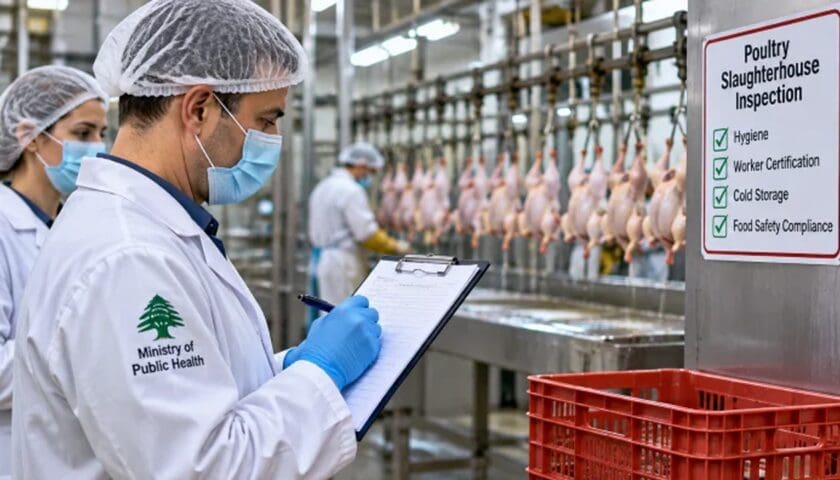
LEBANON – Lebanon has stepped up food safety inspections across poultry slaughterhouses and meat distribution facilities as authorities intensify efforts to enforce hygiene regulations and improve handling standards across the country’s meat industry.
On November 11, 2026, health inspectors from the Ministry of Public Health’s regional department in South Lebanon conducted inspection operations in Sidon and surrounding areas, targeting businesses involved in poultry and meat handling.
The campaign was supported by the State Security Directorate and carried out following instructions from South Lebanon’s public prosecutor.
During the inspections, authorities visited chicken slaughterhouses and issued formal notices requiring operators to obtain the necessary health certificates and comply with the Ministry of Public Health’s operating guidelines.
The enforcement exercise also covered central refrigerated meat warehouses supplying smaller retailers in Sidon.
Some facilities received warnings over inadequate storage practices and the need to improve sanitary conditions to protect meat quality and shelf life.
Hygiene and cold-chain compliance under scrutiny
The campaign extended beyond slaughterhouses and distribution centres, with inspectors closing a retail outlet selling animal organs after identifying violations involving hygiene and refrigeration requirements. The affected products were destroyed.
Although the closure involved an offal retailer, the wider inspection campaign highlights regulatory attention across multiple stages of the meat and poultry supply chain.
For poultry processors, the inspections reinforce the importance of maintaining hygienic slaughtering environments, ensuring workers hold the required health certifications and implementing effective cleaning and sanitation procedures.
Cold-chain management is another critical priority, particularly for refrigerated warehouses and distribution businesses responsible for maintaining appropriate storage temperatures during transportation and retail supply.
Product traceability and proper handling procedures are also essential for identifying potential food safety risks and preventing non-compliant products from reaching consumers.
Implications for poultry processors
The increased enforcement comes as food safety compliance remains a major operational consideration for meat and poultry businesses across the Middle East.
Processors and distributors must maintain effective quality assurance systems covering slaughter, processing, storage and transportation to meet regulatory requirements and protect consumer confidence.
For Lebanon’s poultry industry, the latest campaign signals the importance of stronger coordination between slaughterhouse operators, cold-storage facilities and retailers.
Continued enforcement, alongside investment in modern processing infrastructure, refrigeration systems and staff training, will be important in strengthening food safety standards throughout the country’s meat value chain.
Sign up HERE to receive our email newsletters with the latest news and insights from Africa and around the world, and follow us on our WhatsApp channel for updates.