
Thai chicken exports decline 4.9% as Brazil, China intensify competition
Value-added products cushion Thailand’s poultry exporters against weaker shipments.
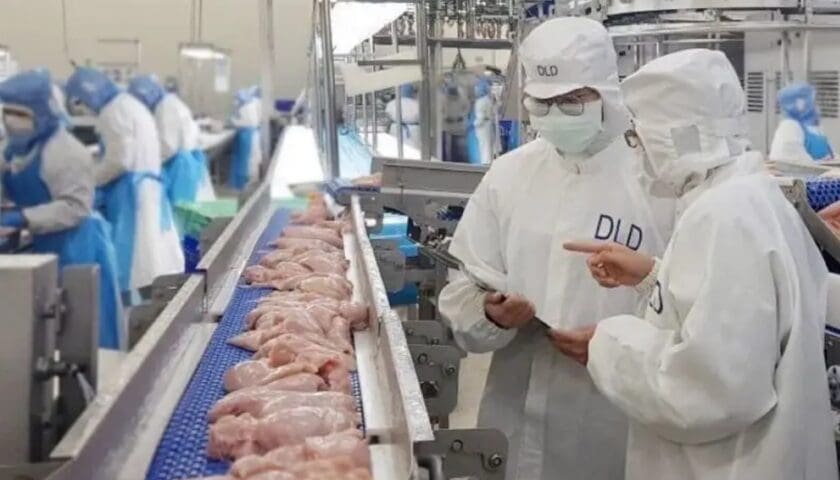
THAILAND – Thailand’s chicken export industry has recorded a 4.9% decline in shipment volumes during the first nine months of 2026, as competition from Brazil and China intensified and trade restrictions continued to affect market access.
However, stronger sales of processed chicken products helped sustain export earnings, highlighting the growing importance of value addition to the country’s poultry sector.
According to Thailand’s Trade Policy and Strategy Office under the Ministry of Commerce, the country exported 863,470 tonnes of chicken meat and chicken products between January and September 2026, down 4.9% year-on-year.
Export revenue, however, edged up 0.11% to approximately US$3.44 billion.
Processed chicken products were a key contributor to this resilience, generating US$2.52 billion, an increase of 7.7% compared with the same period in 2025.
The performance reflects Thailand’s continued focus on higher-value poultry products as exporters face pressure in the global commodity market.
Brazil and China increase competitive pressure
Kukrit Arepagorn, manager of the Thai Broiler Processing Exporters Association, attributed the decline in shipments largely to changing international market conditions rather than domestic production challenges.
Brazil’s return to global markets following improvements in its avian influenza situation has increased competition, while China has expanded production capacity and exports of competitively priced chicken products.
Thai exporters also continue to face restrictions in China, where imports from some Thai chicken processing facilities remain suspended.
The restrictions have limited access to an important destination market.
Japan remains Thailand’s largest chicken export market, with imports estimated at around 510,000 tonnes.
Demand is expected to grow by 1–2%. Other significant destinations include the UK, at approximately 200,000 tonnes, and the European Union, at around 180,000 tonnes.
Malaysia and South Korea import about 100,000 tonnes and 50,000–60,000 tonnes, respectively.
In Europe, competition from lower-priced Brazilian and Chinese products is prompting Thai processors to strengthen operational efficiency, maintain quality and expand premium offerings.
Industry anticipates recovery in 2027
The Thai Broiler Processing Exporters Association expects total chicken exports to reach approximately 1.2 million tonnes in 2026, representing a decline of around 5% from the previous year. This would mark the sector’s first annual contraction in several years.
For 2027, however, the association forecasts growth of about 2%, equivalent to an additional 20,000–30,000 tonnes.
The outlook depends partly on improvements in access to the Chinese market and progress in trade negotiations.
South Korea is considered a promising growth destination, particularly if a proposed Thailand-South Korea free trade agreement reduces tariffs on chicken imports.
Progress in Thailand-EU trade negotiations could also create opportunities for premium poultry and processed food exports.
Thailand’s established food safety systems remain an important competitive advantage. Its avian influenza-free status in commercial poultry production, traceability arrangements and accredited processing facilities continue to support buyer confidence in international markets.
The industry also reported limited disruption from recent flooding, with only two broiler farms affected.
As global competition intensifies, Thailand’s ability to protect market access while investing in processing efficiency, product innovation and food safety will be central to sustaining its position among the world’s major chicken exporters.
Sign up HERE to receive our email newsletters with the latest news and insights from Africa and around the world, and follow us on our WhatsApp channel for updates.