AfDB, Germany partner on African rail competence centre
Africa’s rail systems face structural, not purely financial, challenges.
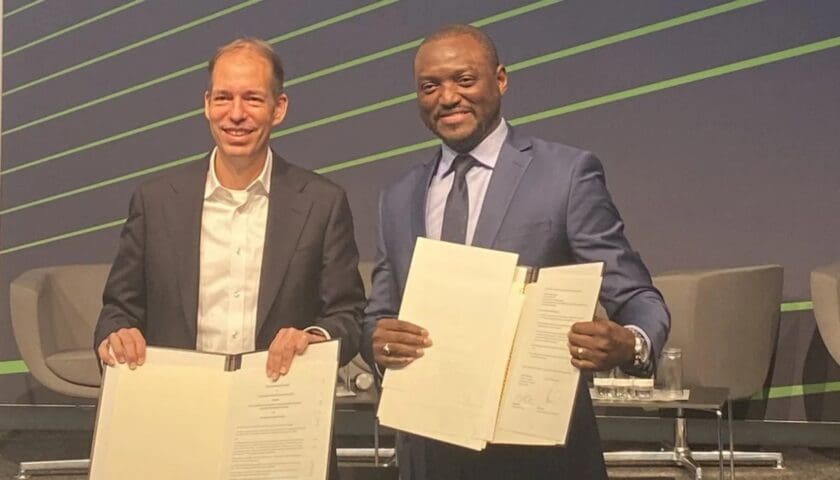
AFRICA – The African Development Bank Group has signed a letter of intent with Germany’s Federal Ministry for Economic Cooperation and Development to develop Africa’s railway systems, starting with a feasibility study for an African Rail Competence Centre, according to a joint statement.
The parties signed the agreement at the inaugural African European Industry Dialogue on Railways at InnoTrans.
Mike Salawou, the AfDB director for Infrastructure and Urban Development, signed on behalf of the bank, while BMZ Deputy Director General Michael Krake signed on behalf of Germany. GIZ will implement the feasibility study, which is expected to launch by October 2026.
Why the partnership matters for rail expansion
Africa’s rail network accounts for only 8% to 10% of the world’s total rail network, while the African Continental Free Trade Area is driving demand for connections across a market of more than 1.4 billion people.
The partnership aims to reduce transport costs, improve cross-border interoperability, and support lower-carbon transport by combining German technical expertise with AfDB financing capacity.
However, Africa’s rail systems face structural, not purely financial, challenges. Cross-border projects frequently stall because countries differ in technical standards, signalling systems, operating procedures, and maintenance capabilities.
Over the years, AfDB-supported investments, including the Lobito Corridor, the Standard Gauge Railway programme in East Africa, the Nacala Corridor, Algeria’s North-South Rail Corridor, and Morocco’s high-speed rail system, have expanded track capacity, yet interoperability between national networks remains limited.
Skills gap, financing structures and the role of rail
For exports, rail is the only economically viable mode for moving bulk commodities, making corridor reliability a direct determinant of export competitiveness.
The emphasis on vocational training reflects a practical constraint. Salawou summarized this: “Building a railway is half the job. Running it is the harder half.”
He also identified five priorities: developing a continental market driven by the AfCFTA, shifting freight across transport modes, establishing interoperable standards, mobilizing financing to attract private capital, and developing the skills needed to operate networks once built.
For financiers, Salawou called for involvement in project preparation, while he also urged European industry to pursue longer-term partnerships that include local content and skills transfer, rather than equipment supply alone.
Ultimately, the competence center feasibility study will assess whether a continental approach to standards and training can reduce fragmentation that limits returns on rail corridor investment.
Sign up HERE to receive our email newsletters with the latest news and insights from Africa and around the world, and follow us on our WhatsApp channel for updates.