Asahi Beverages shifts Australian soft drinks to 100% recycled PET
Bottle-to-bottle recycling infrastructure enables major beverage portfolio to move away from virgin plastic.
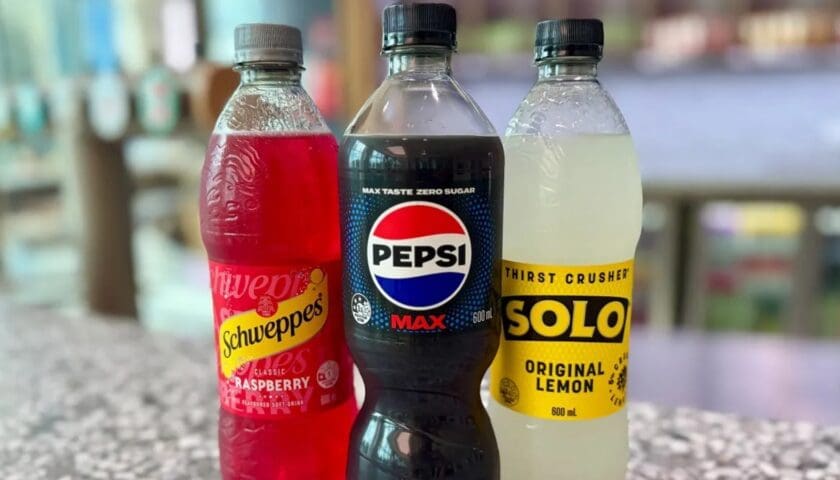
AUSTRALIA – Asahi Beverages has completed the transition of its Australian soft drink portfolio to bottles made entirely from recycled plastic, marking a significant expansion of recycled PET use across the country’s beverage packaging industry.
The move means approximately 350 million Asahi soft drink bottles produced in Australia each year will now be manufactured using recycled plastic rather than virgin PET.
The transition covers brands including Schweppes, Solo and Pepsi Max, while Asahi’s Cool Ridge and Frantelle water and Cottee’s cordial bottles are also made using fully recycled plastic.
Amanda Sellers, CEO of Asahi Beverages Group, said the change would provide consumers and retailers with greater certainty around the sourcing of plastic used in the company’s bottles.
“Redesigning our supply chains this way helps secure our supply of plastic bottles into the future and makes financial sense,” Sellers said.
A major factor behind the switch has been investment in Australia’s domestic PET recycling infrastructure.
Asahi Beverages is part of Circular Plastics Australia, a joint venture with Cleanaway Waste Management, Pact Group and Coca-Cola Europacific Partners.
The partnership has established PET recycling plants in Albury and Altona, increasing the availability of recycled plastic produced domestically.
The facilities process used PET bottles into recycled material that can be returned to bottle manufacturing, creating a bottle-to-bottle circularity model.
For beverage manufacturers, access to reliable supplies of recycled PET is becoming increasingly important as companies seek to reduce dependence on virgin plastic while meeting packaging sustainability targets.
Deposit schemes strengthen collection
The expansion of Australia’s Container Deposit Schemes has also helped increase the availability of used PET bottles for recycling.
Asahi said the combination of deposit-return systems and investment in domestic recycling capacity has helped create the raw material supply needed to manufacture fully recycled soft drink bottles locally.
“By recycling old bottles so that they once again become new bottles and repeating the process, everyday Australians are helping create a more circular economy in Australia,” Sellers said.
The approach also illustrates the importance of linking collection, recycling and packaging manufacturing rather than treating recycling as a standalone activity.
Sign up HERE to receive our email newsletters with the latest news and insights from Africa and around the world, and follow us on our WhatsApp channel for updates.