
Cameroon opens African Coffee Organisation to consumer countries
The revised membership framework aims to strengthen cooperation between African coffee producers and consumers, while creating opportunities to expand processing and retain more value within the continent.
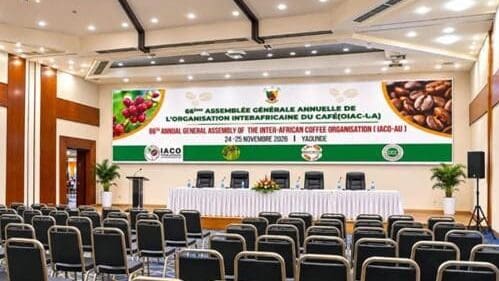
CAMEROON – Cameroon has signed an agreement opening the Inter-African Coffee Organization (IACO) to African coffee-consuming countries, as the government seeks to expand local processing and increase continental sales.
Trade Minister Luc Magloire Mbarga Atangana signed the agreement at the opening of the IACO’s 66th annual meetings in Yaounde.
The 2020 agreement replaces the organisation’s 1998 framework and allows African coffee-consuming countries to seek membership alongside producers.
The revised framework provides producers and consumers with a platform to discuss coffee processing, marketing and sales within Africa. It also supports regional trade under the African Continental Free Trade Area (AfCFTA).
Mbarga Atangana, the organisation’s outgoing president, said the continent’s market of 1.3 billion consumers offered an opportunity for African producers and processors to reach more buyers.
He said stronger intra-African trade could reduce producing countries’ dependence on international markets, where prices are volatile.
The minister linked the agreement to Cameroon’s policy of processing more raw materials domestically and encouraging consumption of locally made products.
He called for producing countries to retain a greater share of the value generated after coffee leaves farms, including through processing and marketing.
“We need to change our approach. […] The future of African coffee must not be decided without Africa. Still less should it be decided without African producers,” Mbarga Atangana said.
Cameroon’s local roasters processed about 750 tonnes of coffee in the 2024-25 season, up nearly 7% following a 44% decline in the previous season, according to the National Cocoa and Coffee Board.
Mbarga Atangana said international prices for robusta and arabica had risen significantly over the past three years, but growers continued to face unpredictable prices and limited transparency over revenue distribution along the supply chain.
For the 2024-25 season, the board recorded prices of CFAF1,300 to CFAF2,500 per kilogram for robusta and CFAF2,500 to CFAF3,500 for arabica.
The minister called for fairer, more transparent payments to farmers, alongside improved access to water, electricity and other services in coffee-growing communities.
The change gives consuming countries a formal route into the organisation and a role in discussions shaping the continent’s coffee trade and future sector policies and development.
Sign up HERE to receive our email newsletters with the latest news and insights from Africa and around the world, and follow us on our WhatsApp channel for updates.