Cornell researchers transform byproducts into clean-label, functional ingredients
Microwave vacuum drying preserves the antioxidants and colour of grape pomace, while activated carbon treatment removes off-flavours from acid whey, enabling clean-label product development.
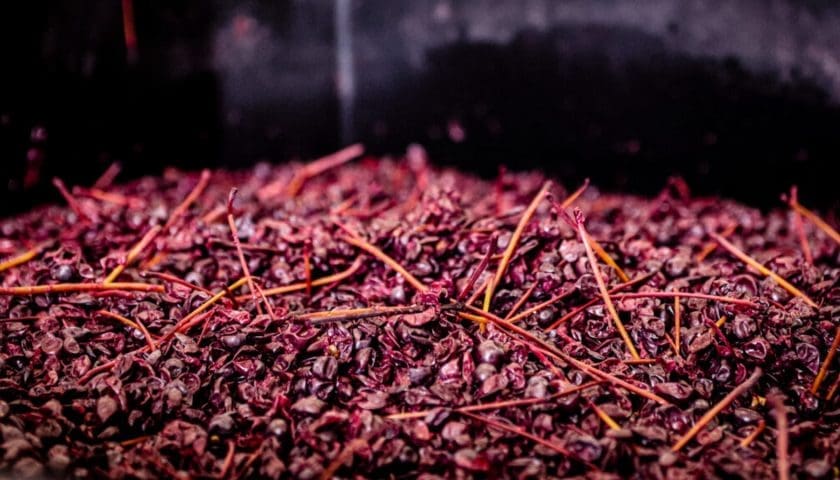
U.S.A. – Researchers at Cornell University’s Agriculture and Food Technology division are exploring innovative ways to upcycle food byproducts into nutrient-rich, functional ingredients.
One focus is grape pomace, the solids left after grapes are pressed for wine or juice.
Naturally high in moisture and microbial content, grape pomace is rich in polyphenols and antioxidants but requires processing to be viable for food applications.
The team employs microwave vacuum drying, a rapid technique that dries the pomace in just 20 minutes while preserving its bright red colour and nutrient profile.
The dried grape pomace has been successfully incorporated into snack bar prototypes alongside local protein and fibre sources such as buckwheat and hemp, with sensory evaluations showing a preference for the buckwheat blend due to its neutral flavour.
Beyond its nutritional value, grape pomace also holds potential as a natural alternative to synthetic red food dyes, particularly relevant after the FDA’s 2025 decision to revoke Red No.3.
Another ingredient under investigation is acid whey, a byproduct of Greek yoghurt, produced in roughly a 2:1 ratio compared to the yoghurt itself.
Although rich in minerals including calcium, phosphorus, sodium, and potassium, acid whey’s sour flavour and aroma have historically limited its use in formulations.
Cornell researchers apply an activated carbon treatment to deodorise the whey, effectively removing off-flavours and improving consumer acceptability in taste tests conducted with 100 participants.
The treated whey can serve as a clean-label ingredient for sports recovery drinks, allowing manufacturers to list only “acid whey” rather than every individual mineral on the ingredient panel.
The approach not only simplifies formulations but also adds market value, with research indicating that consumers are willing to pay more for clean-label products.
Both projects address broader sustainability and food system challenges.
Upcycling grape pomace and acid whey reduces waste, contributes to lowering greenhouse gas emissions from food production, and offers functional, nutrient-rich ingredients for product development.
By transforming what would otherwise be discarded into high-value components, these initiatives highlight the potential of upcycled ingredients to support sustainable, consumer-friendly food innovations.
“Twenty six percent of greenhouse gas emissions are originating from food production,” said Punzalan, one of the postdoctoral associates at Cornell University Agricultural Experiment Station.
He added that with the global population projected to increase to eight billion in the next two decades, there is an urgent need to develop strategies to increase food production without overwhelming the environment.
“Right now, 30% of calories are wasted, and 30% of that is lost in the food system. So, what we need to do is put this back into our system in order to solve some of this food loss,” he said.
Additionally, Viral Shukla, another postdoctoral associate part of the research team, confirmed that consumers are willing to pay nine cents more for a clean-label product, compared to a non-clean-label one.
Sign up HERE to receive our email newsletters with the latest news and insights from Africa and around the world, and follow us on our WhatsApp channel for updates.