

ICAR opens genome editing centre, farmer training hub in Bengaluru
The Centre of Excellence for Genome Editing, equipped with a Biosafety Level-II Laboratory, marks an important step towards strengthening advanced biotechnology research and genome-editing capabilities in horticultural crops.
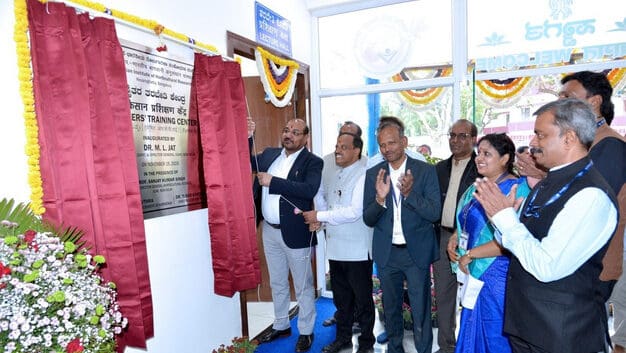
INDIA – The Indian Council of Agricultural Research has inaugurated a Farmers’ Advanced Training Centre and a Centre of Excellence for Genome Editing in Horticultural Crops, including a Biosafety Level-II Laboratory, at the ICAR-Indian Institute of Horticultural Research in Bengaluru.
Dr M. L. Jat, Secretary of the Department of Agricultural Research and Education and Director General of ICAR, inaugurated the facilities on 15 November 2026.
Following the inauguration, Jat met with progressive farmers, incubatees, entrepreneurs, nursery owners and practitioners of natural farming who have adopted ICAR-IIHR varieties and technologies.
The discussions focused on natural farming practices, horticultural innovations and strategies to mitigate the impact of El Niño and Super El Niño on horticultural crops.
Farmers shared their experiences of adopting climate-resilient practices, including mulching, sprinkler irrigation, border cropping, intercropping with short-duration flower and vegetable crops, and green manuring, according to ICAR.
More importantly, these interventions have helped improve crop yields, produce quality and farmers’ incomes.
Jat emphasized the importance of encouraging educated youth, engineers and agricultural graduates to actively participate in and invest in agriculture by adopting scientific innovations.
He highlighted the need to integrate modern technologies with traditional wisdom while keeping farmers at the center of research and development.
Additionally, he appreciated the role of ICAR institutions, Krishi Vigyan Kendras and Agricultural Technology Application Research Institutes in popularizing innovative technologies through government programmes, particularly the Khet Bachao Abhiyan, and assured that successful farmer innovations would be documented and widely disseminated.
Meanwhile, the Centre of Excellence for Genome Editing, equipped with a Biosafety Level-II Laboratory, marks an important step towards strengthening advanced biotechnology research and genome-editing capabilities in horticultural crops.
Jat emphasized that scientists should prepare for the future by developing self-reliance in genome resources for genome-editing research.
He highlighted the need for prioritization, better targeting, a robust data ecosystem, and the identification of opportunities for Indian agricultural research to meet global standards.
During his interaction with postgraduate students, Jat emphasized the need to nurture young scientific talent.
He also urged scientists to move beyond conventional approaches, working towards making agriculture a major contributor to India’s vision of a US$30 trillion economy by 2047, with a targeted US$6 trillion contribution from agriculture.
Lastly, he also highlighted the potential of microbial technologies, biofertilizer start-ups and innovations in health and nutrition.
Sign up HERE to receive our email newsletters with the latest news and insights from Africa and around the world, and follow us on our WhatsApp channel for updates.