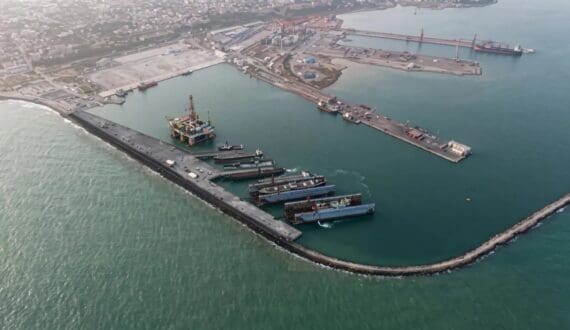
Mawani, Lloyd’s Register sign three-year maritime development MoU
The partners will also consider collaborating on innovation, maritime insurance, training, and professional qualifications.

SAUDI ARABIA – The Saudi Ports Authority and Lloyd’s Register have signed a three-year MoU to explore collaboration in maritime governance, capacity building, sustainability, digitalisation, regulatory compliance and risk management, according to a joint statement.
The partnership aligns with Saudi Arabia’s National Transport and Logistics Strategy, launched in 2021.
Scope of collaboration
The partners will assess how Lloyd’s Register’s advisory expertise could strengthen maritime and port administration and operations.
Potential activities include governance and organizational assessments, competency frameworks, leadership development, stakeholder engagement, and policies aligned with international standards.
On sustainability, the two organizations will explore environmental management systems, decarbonization initiatives, green port programmes, and ESG strategies, performance indicators, and reporting frameworks.
Skills development is another priority, with possible measures including closer links between education and industry, support for workforce localization, and greater participation and career development for women in the maritime sector.
Moreover, the partners will also consider collaborating on innovation, maritime insurance, training, and professional qualifications.
James Frew, maritime advisory and energy sales director at Lloyd’s Register, said: “This agreement reflects our shared ambition to support a safe, sustainable and future-ready maritime sector in line with Saudi Arabia’s ambitions to position itself as a global logistics hub.”
“By combining Mawani’s national leadership with LR’s international maritime and technical experience, we can identify practical opportunities to strengthen capability and accelerate innovation,” he added.
Implementation context
The agreement follows other Mawani partnerships in 2026, for instance, the addition of PIL’s intra-Red Sea feeder service at Jeddah Islamic Port.
Second, the signing of seven logistics contracts worth SAR 1 billion (US$262 million) for facilities in Jeddah and Al Khumra.
Thirdly, the Red Sea Gateway Terminal and CMA CGM’s US$434 million Terminal 4 development in Jeddah.
For Saudi Arabia’s port sector, the governance and compliance component addresses a practical constraint on growth.
The kingdom’s ports handled 866,200 TEUs in October 2026, up 14% year on year, with Jeddah Islamic Port setting a monthly record of 582,900 TEUs.
As a result, sustaining that growth requires regulatory frameworks and safety standards that keep pace with expanded capacity.
Lastly, the workforce-localization element has longer-term significance. Saudi Arabia’s maritime sector relies substantially on expatriate technical staff, and developing domestic competency through education-industry links is a prerequisite for reducing that dependency as port capacity expands towards the strategy’s 2030 targets.
Sign up HERE to receive our email newsletters with the latest news and insights from Africa and around the world, and follow us on our WhatsApp channel for updates.