
Morocco secures US$112M AFD loan for 2030 port strategy
Morocco’s ports handled 262.6 million tonnes of cargo in 2025, up 8.9% from 241.2 million tonnes in 2024.
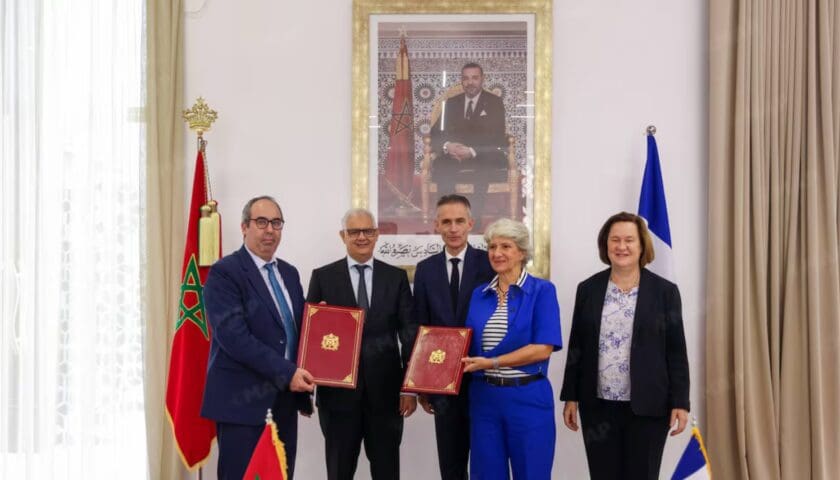
MOROCCO – Morocco’s National Ports Agency has secured €100 million (about US$112 million) in financing under a third agreement with the French Development Agency, signed in Rabat on 3 November 2026, according to a joint declaration.
AFD will provide funding through a 13-year non-sovereign loan without a Moroccan government guarantee.
Investment priorities and southern ports focus
The financing supports the agency’s 2023-2030 investment programme across four priority areas: upgrading and reinforcing port infrastructure; developing renewable energy and desalination facilities; expanding and modernizing fishing ports; and decarbonizing and electrifying port quays.
The programme places particular emphasis on ports in Morocco’s southern provinces, including Tan-Tan, Tarfaya, Laâyoune, Boujdour, Dakhla and Lamhiriz, to stimulate economic development in surrounding territories and strengthen the country’s position along the Atlantic coast.
Recent project milestones and traffic growth
Morocco inaugurated the container terminal at Nador West Med this week and awarded APM Terminals a concession last week to develop Tanger Med 3, a new container terminal with an annual capacity of 4.5 million TEUs.
Morocco’s ports handled 262.6 million tonnes of cargo in 2025, up 8.9% from 241.2 million tonnes in 2024, according to the Ministry of Equipment and Water.
Tanger Med drove much of that growth, handling 10.3 million TEUs in container transhipment traffic, up 7.9%.
Financing history and implementation requirements
AFD and the National Ports Agency began their partnership in 2012 with a €50 million loan. A second agreement in July 2020 included a €100 million loan and an €800,000 grant, supporting an investment programme exceeding €600 million focused on reinforcing port structures, protecting facilities against rising sea levels, improving energy efficiency, and preventing marine pollution.
The latest loan’s non-sovereign structure is notable: it shifts repayment risk to the National Ports Agency rather than to the Moroccan treasury, requiring the agency to generate sufficient revenue from port operations to service the debt.
The southern ports component carries strategic weight beyond infrastructure. Dakhla and Laâyoune sit on the Atlantic coast facing West Africa, and their development supports Morocco’s ambition to capture transit trade with Sahel economies, including Mali and Niger. That trade currently routes through ports in Senegal, Côte d’Ivoire and Ghana.
Finally, infrastructure expansion alone will not guarantee increased trade volumes. Morocco will need stronger inland transport connections, port facilities that attract shipping operators, and the sustained capacity to capture regional cargo flows to achieve its 2030 ambitions.
Sign up HERE to receive our email newsletters with the latest news and insights from Africa and around the world, and follow us on our WhatsApp channel for updates.