
South Africa’s retail sector faces tougher competition as digital shopping expands
Shoprite, Pick n Pay, SPAR and Woolworths are adapting to shifting consumer spending and faster digital adoption.
SOUTH AFRICA – South Africa’s retail sector has long been a cornerstone of the economy, contributing significantly to employment, GDP, and consumer confidence in one of the continent’s most sophisticated consumer markets. The vibrant yet unpredictable and volatile retail sector has grown into Africa’s most sophisticated consumer arena and a brutal proving ground for global giants and local stalwarts alike.
Far from a sleepy corner of emerging markets, South Africa’s retail sector is a R1.5-trillion-plus (US$90.6B) engine driving jobs, shaping urban life, and signalling the health of the broader economy. According to Statistics South Africa (Stats SA), retail trade sales grew by 3.7% in real terms in 2025 compared to 2024. However, monthly figures reveal uneven momentum: a strong 4.2% year-on-year surge in January 2026 gave way to a softer 1.6% in February. Retail trade sales increased by 2.6% year-on-year in March, exceeding analysts’ expectations of a 2.5% rise.
Key players in South Africa’s retail industry
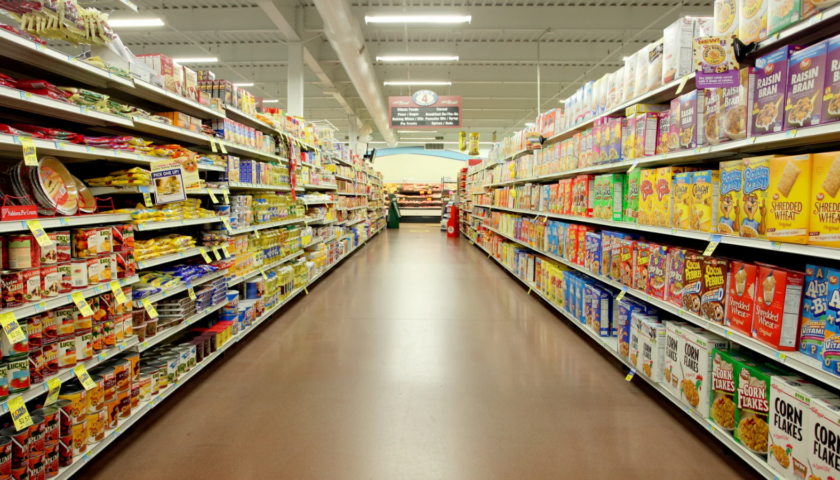
South Africa is known for a very competitive retail industry, especially in food and drinks. Shoprite Holdings stands unchallenged as the undisputed leader, followed by a competitive pack of Pick n Pay (including its Boxer discount arm), SPAR, and Woolworths. Together with Massmart, these groups account for well over 60% of organised food retail.
The dominant, Shoprite Holdings, controls an estimated 25% to 30% of the formal sector. The group continues to grow through its multi-brand strategy, which includes Shoprite, Checkers, Usave, and the fast-growing Sixty60 delivery platform. In the 2025 financial year, the retailer reported sales of R252.7 billion (US$13.8B), representing annual growth of 8.9%. Trading profit climbed 16.6% to R15 billion (US$820M), while EBITDA rose 18.8% to R23.8 billion (US$1.3B). Retail trade sales showed resilient growth in early 2026, increasing by 2.8% year-on-year for the March-ending period.
At the same time, Pick n Pay remains one of South Africa’s largest retailers. However, as the second-largest retailer in the country, the group has faced mounting pressure on profitability in recent years. In response, the company has accelerated restructuring efforts while increasing investment in its discount chain, Boxer. During the first half of its 2026 financial year, group turnover rose 4.9% to R58.8 billion (US$3.2 billion). Boxer delivered particularly strong growth of 13.9%, helping to stabilise the broader group’s performance. However, Pick n Pay made R4.7 billion ($282 million) in May 2026 by selling 57.3 million shares (roughly a 12.5% stake) from Boxer.
Another market-dominant retailer is SPAR Group. It continues to hold a strong position in South Africa’s grocery sector through its wholesaler-franchise model. The retailer has built a solid presence in neighbourhood stores and smaller towns, particularly within the convenience and fresh produce segments. In its 2025 financial year, the group reported turnover of R132.4 billion (US$7.2 billion), while its Southern African business contributed R97.7 billion (US$5.3 billion).
Last but not least, Woolworths Holdings. The retailer continues to dominate South Africa’s premium grocery segment by focusing on product quality, convenience, health, and innovation rather than scale alone. Although its overall market share remains smaller than rivals such as Shoprite, the retailer retains a strong influence among affluent consumers. To add to that, its food division delivered steady growth through 2025 and into 2026, with South African food sales increasing by about 7% during the first half of FY2026. The retailer also continued gaining market share while recording positive volume growth. Also, Its on-demand delivery platform, Woolies Dash, expanded by 23% and now contributes 7.2% of South African food sales.
Why are local and global players betting big on South Africa?
South Africa’s retail industry remains one of the most attractive markets on the continent for both domestic and international players. Below are some of the main reasons why this is no ordinary retail market.
Financial maturity in an urbanising population
The South African retail market’s attractiveness stems from its scale, relative maturity compared to much of sub-Saharan Africa, and potential for high-volume, value-driven sales. A large urbanising population, established supply chains, and a sophisticated financial services ecosystem make it a natural hub. Despite muted growth, real retail sales have shown positive momentum, supported by easing inflation, interest rate cuts, and a stabilised energy supply.
This has paved the way for international players. For instance, in a landmark move, Walmart opened its first branded store in Africa in Roodepoort, Johannesburg, in November 2025, following years of operating through its Massmart subsidiary. The expansion did not stop there. The retail giant later opened two additional stores, including its newest branch at East Point Shopping Centre in Boksburg, Ekurhuleni, in February 2026. The Boksburg outlet forms part of Walmart’s wider rollout strategy, with plans underway to establish 21 more stores across Gauteng, KwaZulu-Natal and the Western Cape.
Locally, Shoprite Holdings, Africa’s largest food retailer, has aggressively refocused on its home market. In 2025, it exited operations in Ghana and Malawi, following previous withdrawals from Nigeria, Kenya, Uganda, Madagascar, and the Democratic Republic of Congo. These moves, driven by financial losses, currency volatility, supply chain complexities, and inconsistent returns in other African markets, allow Shoprite to consolidate resources and capitalise on its dominant position in South Africa’s more stable and profitable environment. Its remaining African operations now centre on SADC countries.
Sign up HERE to receive our email newsletters with the latest news and insights from Africa and around the world, and follow us on our WhatsApp channel for updates.