Published
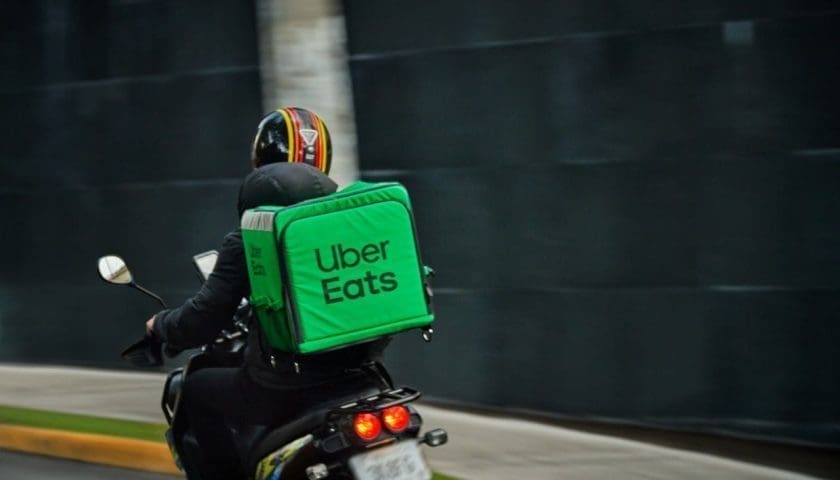
UK- Online food ordering and delivery platform Uber Eats has unveiled a range of new features for grocery delivery, including requiring its couriers to pick and pack orders to enhance efficiency amid high competition and ballooning demand in grocery orders in the UK.
The e-commerce platform revealed that customers will connect directly with an Uber Eats courier who will go to their retail outlet on their behalf, pick up and pack their order, and deliver it to the customer’s preferred drop-off locations.
In the courier pick and pack feature, customers will communicate with couriers in real time as they walk into the stores to allow for correct substitutions for products that are out of stock.
The new feature also includes aisle indexing, which helps couriers locate product placements easily and expedites the shopping process.
Uber Eats has lauded the move, alluding that offering an extra layer of convenience will help the grocery company consolidate market share in a rapidly growing e-commerce market.
Susan Anderson, Uber’s Head of Grocery and Retail, said, “Our busy lifestyles mean we physically go to the supermarket for a big shop less frequently and prefer to rely more on apps like Uber Eats to order fresh grocery ingredients when we want them.”
“We’re seeing that customers don’t necessarily need things in 10 minutes. Within that 30 minutes to an hour is really what customers are looking for. But it’s the range of what they can get in that space—it’s going to increasingly matter, and that [is what] people will start pushing the dimensions on.”
The company revealed its grocery orders have more than doubled in the past two years as more players enter the market.
Competitors like Gopuff, for example, disrupted the market after its entry in 2021 because it specializes in rapid grocery delivery. The company currently covers 70% of the greater London area and is expected to consolidate more market share in the UK.
The move is a response to such entrants and players in the market. Analysts predict a period of rapid expansion of the ecommerce market as players continue to find more innovative solutions to customers.
Liked this article? Subscribe to Food Business Africa News, our regular email newsletters with the latest news insights from Africa and the World’s food and agro industry. HERE
No related posts.
We use cookies to improve your experience on our site. By using our site, you consent to cookies.
Manage your cookie preferences below:
Essential cookies enable basic functions and are necessary for the proper function of the website.
These cookies are needed for adding comments on this website.
Google's current Sign in with Google client library. It renders the Google sign-in button, or the One Tap prompt, so visitors can log in to your site with their Google account. It replaces the older Google Sign-In platform library.
Service URL: policies.google.com (opens in a new window)
Google Tag Manager simplifies the management of marketing tags on your website without code changes.
Statistics cookies collect information anonymously. This information helps us understand how visitors use our website.
Google Analytics is a powerful tool that tracks and analyzes website traffic for informed marketing decisions.
Service URL: policies.google.com (opens in a new window)
WPMU DEV Analytics is the visitor statistics feature of the WPMU DEV Dashboard plugin. It reports traffic and visitor behavior inside The Hub using a Matomo analytics instance hosted by WPMU DEV.
Service URL: wpmudev.com (opens in a new window)
Marketing cookies are used to follow visitors to websites. The intention is to show ads that are relevant and engaging to the individual user.
AddToAny provides share and follow buttons that let visitors post your pages to social networks, messaging apps, and bookmarking services.
Service URL: www.addtoany.com (opens in a new window)