US program targets echinacea adulteration with updated guidance
The guidance provides manufacturers and suppliers in the herb, food, and nutraceutical sectors with updated tools to ensure authentic, properly labeled echinacea ingredients.
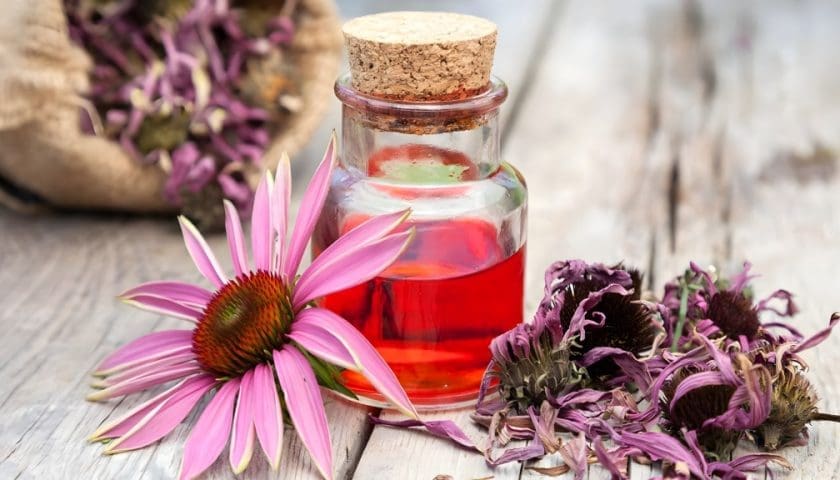
U.S.A – The US Botanical Adulterants Prevention Program (BAPP) has released a new bulletin on Echinacea (E. angustifolia, E. pallida, and E. purpurea) roots and herb, providing the global herb and dietary supplement industry with a comprehensive quality control resource.
The document is intended to help responsible manufacturers establish appropriate identity specifications for echinacea ingredients, a pressing need given the herb’s long history of adulteration.
Echinacea, widely used for immune support, ranked second and fourth in sales among herbal dietary supplements in the US mainstream and retail channels, generating over US$168 million.
It is not used as a food commodity on its own or in recipes for cooking, but there are tea and honey products, found from online sources, supplemented with Echinacea and Echinacea extracts.
Persistent authenticity issues have accompanied the herb’s commercial success. Early adulteration cases involved the substitution of echinacea roots with Parthenium integrifolium (prairie dock).
While prairie dock is not known to be highly toxic, it lacks echinacea’s key bioactive compounds and offers no proven immune-support benefits. Its use as a substitute undermines product efficacy and consumer trust.
At the same time, more recent problems include mislabeling of species, mixing of multiple species in products marketed as single-species extracts, inclusion of undeclared leaf extracts, formulations dominated by excipients, and adulteration of E. angustifolia extracts with Cistanche species.
“Most authenticity issues with echinacea supplements may stem from inadvertent blending of two species in a single batch or admixture of aerial parts with roots,” explained Stefan Gafner, PhD, chief science officer at the American Botanical Council (ABC) and director of BAPP.
“Nevertheless, there are also cases of economically motivated adulteration.”
Gafner noted that some industry members have reported extracts from Cistanche species being sold as Echinacea angustifolia.
Because desert broomrape (Cistanche deserticola), a plant used in traditional Chinese medicine, is listed under CITES Appendix II, its trade is restricted and requires a permit.
Manufacturers who unknowingly market desert broomrape as echinacea risk violating both current Good Manufacturing Practices (cGMPs) for dietary supplements and CITES regulations.
The bulletin, authored by Sebnem Harput Döner, PhD, an Istanbul-based natural products and pharmacology expert, and Dr. Gafner, summarizes the scientific literature on echinacea adulteration.
It also provides detailed information on taxonomy, chemistry, supply chain, sourcing, and analytical methods for authentication.
Peer-reviewed by 25 medicinal plant quality control specialists from research institutions, analytical laboratories, academia, botanical gardens, and industry, the bulletin represents a collaborative effort to strengthen supply chain integrity.
Mark Blumenthal, founder and executive director of the American Botanical Council, noted that echinacea species such as E. purpurea are easy to grow and relatively low-cost, making large-scale fraud uncommon.
He said the new BAPP bulletin will help companies establish stronger identity specifications and ensure product authenticity.
Sign up HERE to receive our email newsletters with the latest news and insights from Africa and around the world, and follow us on our WhatsApp channel for updates.