

Value-chain discipline could transform India’s table potato losses into reliable profits
The contrast between table potatoes and the processing sectors is stark.
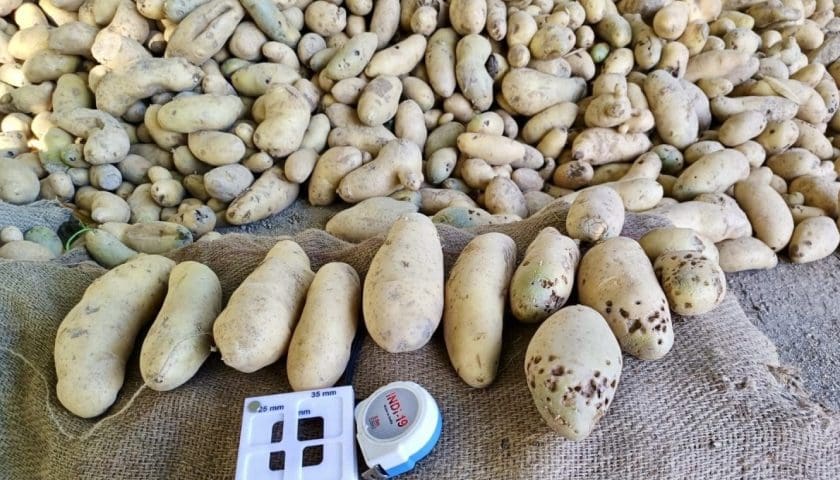
INDIA – India’s table potato sector has remained trapped in cyclical gluts and price collapses while the processing industry thrives, prompting calls for farmers to adopt organized value-chain discipline including certified seeds, contract farming, and modern storage solutions.
India harvests approximately 58 to 60 million metric tons of potatoes annually across 2.2 to 2.5 million hectares, with over 60% coming from the Indo-Gangetic plains of Uttar Pradesh, Bihar, and West Bengal.
Despite this massive production, table potato farmers face cyclical gluts, and prices collapse every four to five years.
“That’s a whopping 20 million tonnes surplus beyond the 40 million tonnes needed for domestic consumption, leaving farmers at the mercy of seasonal gluts and no minimum support price,” explains Dr. Akhilesh Kumar, CEO of Eden Horticulture Services.
The contrast between table potatoes and the processing sectors is stark. For instance, states like Uttar Pradesh, Bihar, and West Bengal produce table potatoes at 20 to 22 tons per hectare, while Gujarat’s processing sector achieves 34 to 35 tons per hectare through complete value-chain integration.
To address these challenges, Dr. Kumar and his team have developed a seed production model in Leh, Ladakh, at 3,500 meters altitude. The temperate climate offers low pest pressure and long summer photo periods, enabling open-field multiplication of virus-free seeds.
“We take foundation seeds from processors like McCain and Falcon, sow Santana variety in April, harvest by September, and deliver certified seeds to Gujarat by October for their winter crop,” he explains. The region’s cold, dry climate and silica-rich sandy soils also produce thick-skinned tubers ideal for long-term storage.
As for table potato farmers in Uttar Pradesh and Bihar, Dr. Kumar advocates for cooperative models that pool resources for cold storage, allowing strategic sales timing rather than dumping during gluts.
In addition, he emphasizes that cold storage must replace carcinogenic CIPC, an anti-sprouting chemical already banned in the European Union with safer mint oil alternatives that command premium clean-label prices. Modern wooden bin systems should replace outdated bag stacking to reduce damage and improve airflow.
“Value-added products from farm agro-waste for bio-pesticide development, and the use of rotten cold-storage potatoes for biogas, bioplastic, green manure, and vodka production can create additional revenue streams for potato growers,” Dr. Kumar concludes.
The bottom line is, “Processors prove potatoes can be reliable cash crops; the table sector just needs that same value-chain discipline,” said Dr. Kumar.
Sign up HERE to receive our email newsletters with the latest news and insights from Africa and around the world, and follow us on our WhatsApp channel for updates.