Sugarcane harvest begins in Oman; favourable conditions boost yields
Oman’s sugarcane sector offers opportunities to modernise traditional processing.
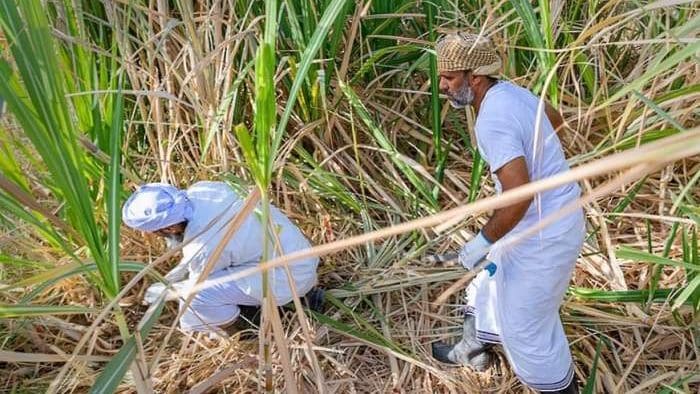
OMAN – The sugarcane harvest season has officially begun across multiple Omani governorates, with favourable environmental and climatic conditions expected to deliver strong yields.
Harvesting activities will continue throughout April, marking a crucial period for local agriculture and traditional food production beyond just sugar extraction.
To begin with, farmers in the wilayats of Manah and Adam in Dakhliyah governorate, one of the country’s main sugarcane-producing regions, have already begun harvesting.
Additionally, Dakhliyah remains particularly known for large-scale production, hosting both traditional and modern grind presses used to extract juice and process the crop.
For Middle Eastern investors, Oman’s sugarcane sector offers opportunities to modernise traditional processing. While the current system produces high-value traditional goods, investment in efficient extraction technology, packaging, and quality standardization could expand market reach beyond local consumers.
On the other hand, the crop’s versatility, producing red sugar, balooj, sharj, khameer, and molasses (zeej), offers multiple product lines that could be scaled for regional distribution.
Therefore, harvest supports not only sugar production but also traditional Omani goods that hold cultural significance and steady local demand.
Sugarcane belongs to the grass family and requires intensive irrigation, thriving in warm climates with extended growing seasons, often approaching a full year. The crop is used almost entirely, reflecting the efficiency of traditional agricultural practices.
Resource efficiency is a hallmark of the sector. By-products from sugarcane processing are used as livestock feed and natural fertilizer, while leftover cane stalks serve as firewood. This circular approach minimizes waste and creates additional value streams for farming communities.
For investors focused on sustainability, the model demonstrates how agricultural by-products can generate supplementary income while reducing environmental impact.
For regional food industry stakeholders, Oman’s sugarcane harvest ensures continuity of supply chains for traditional products that remain integral to local markets.
During the harvest season, farmers and producers offer freshly processed sugarcane products to consumers, driving increased commercial activity. The crop’s role in sustaining both local supply chains and traditional manufacturing processes underscores its strategic importance within Oman’s agricultural calendar.
As harvesting expands across governorates, the 2026 season signals strong agricultural output supported by favourable growing conditions.
For investors and policymakers across the Middle East and Africa, Oman’s sugarcane sector offers lessons in maximizing crop utilization, preserving traditional production methods, and identifying modernization opportunities that enhance efficiency while preserving cultural authenticity.
Sign up HERE to receive our email newsletters with the latest news and insights from Africa and around the world, and follow us on our WhatsApp channel for updates.