Egypt exports rise 3.6% to US$4.53B in May, 2026
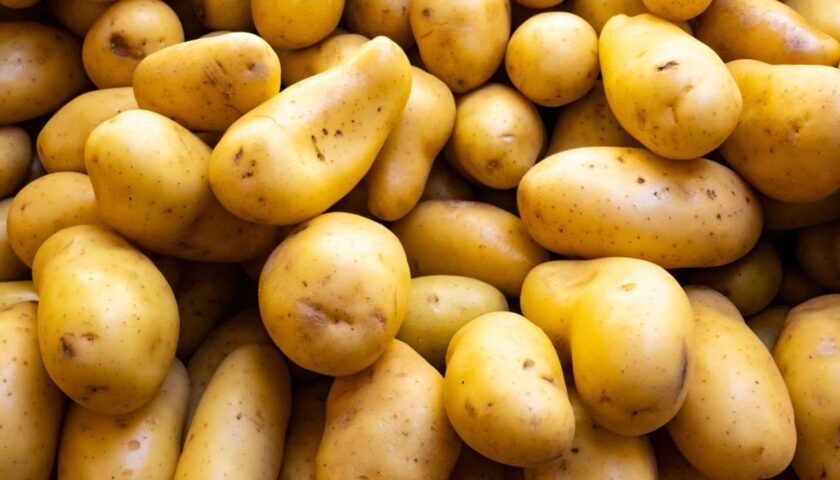
Potatoes led Egypt’s vegetable exports at 17,000 tonnes, followed by onions at 11,000 tonnes and various beans at 5,000 tonnes.
EGYPT – Egypt’s exports have risen 3.58% year on year in May 2026 to US$4.53 billion, driven by higher shipments of fresh fruit, fertilizers, plastics, and crude oil, which contributed to a slight reduction in the national trade deficit.
According to the Central Agency for Public Mobilization and Statistics, the increase was driven by higher exports of several commodities, including fresh fruit (up 40.3%), fertilizers (up 9.4%), plastics in primary forms (up 29.1%), and crude oil (up 56.4%).
The rise was partly offset by declines in exports of ready-made garments, down 10.4%; pasta and other food preparations, down 12.6%; and iron bars, rods, angles and wires, down 50.2%.
On the other hand, imports rose 1.72% to US$8.52 billion, driven by higher imports of natural gas (up 96.8%), petroleum products (up 18.2%), and wheat (up 33.5%).
Consequently, Egypt’s trade deficit narrowed slightly to US$3.99 billion, down from US$4.00 billion in the same month last year.
Furthermore, Egypt’s National Food Safety Authority reported that food export consignments from 1,333 exporting companies reached 3,900, totalling 160,000 tonnes and covering about 683 types of food products.
The exports included vegetables and tubers, fruits, preserved vegetable and fruit preparations, flour and grain products, and other food products. The report said that 44 types of vegetables were exported, totalling 46,000 tonnes.
Potatoes led Egypt’s vegetable exports at 17,000 tonnes, followed by onions at 11,000 tonnes and various beans at 5,000 tonnes. Egypt exported 33 types of fruit totalling 31,000 tonnes, with strawberries leading at 11,000 tonnes, followed by citrus fruits and mangoes at 6,000 tonnes each.
Sudan was the largest importer of Egyptian food products, followed by the Netherlands, Saudi Arabia, the US, and Jordan, among 184 countries importing Egyptian food products. Alexandria Port handled the most food export consignments, with 688, followed by Damietta Port with 582 and Safaga Port with 510.
As part of efforts to support food exports, the authority issued 1,110 health certificates to ensure products meet safety requirements and to strengthen international market confidence in Egyptian exports.
The most significant global markets for Egyptian trade include Sudan, the Netherlands, Saudi Arabia, the US, and Jordan for exports, while the US, Indonesia, Russia, Brazil, and China are key import partners.
Lastly, issuing health certificates demonstrates Egypt’s commitment to upholding rigorous safety standards to protect its export reputation and to facilitate continued market access.
Sign up HERE to receive our email newsletters with the latest news and insights from Africa and around the world, and follow us on our WhatsApp channel for updates.