West Africa’s floods disrupt logistics, infrastructure, Ivorian mango exports spared
The impact has been felt in both the supply chain and production, with roads cut off, making harvesting difficult.
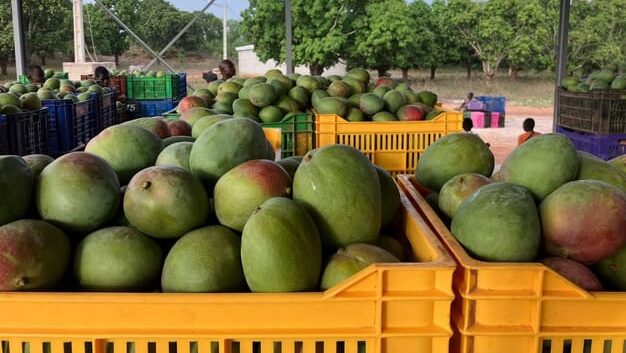
WEST AFRICA – Recent flooding in West Africa has posed distinct challenges for the agricultural sectors in Côte d’Ivoire and Ghana, primarily affecting logistics and infrastructure; however, Ivorian mango crops remain secure.
To begin with, in Côte d’Ivoire, the mango sector, the country’s leading fruit export, has escaped the worst damage, according to Yeo Namoukatiene Siaka, president of the mango industry’s coordination body. “Mangoes are grown in the north of the country, where the floods have had no real impact,” he explains.
“It is only in the south of Côte d’Ivoire that pineapple and banana growers have been affected.” The impact has been felt in both the supply chain and production, with roads cut off, making harvesting difficult.
He calls for emergency measures, including support for growers to cover losses and the rebuilding of roads and local fresh-produce markets in affected urban areas. Regarding domestic market needs, Siaka is reassuring: “There’s little to no impact on the local market in terms of essential goods; the products affected are mainly tropical fruits, not staples.”
Furthermore, the situation differs significantly in Ghana, where flooding has hit the capital hard while largely sparing production regions.
According to Kingsley Asare, CEO of Kingrex, an exporter of fresh produce, “The flooding is mainly concentrated in Accra itself, not in the production areas. Farms have been spared. The growing areas have been barely affected, if at all.“
However, the damage is most significant to storage and transportation, with logistics paralyzed in certain areas of Accra and northern Ghana. Accra serves as the main storage hub for fresh produce, and some warehouses have been damaged while others have been completely washed away.
Fresh fruit and vegetable traders are still assessing the extent of losses, with tomatoes appearing hardest hit given their seasonality.
For Asare, the scale of this event sets it apart from anything Ghana has experienced before: “We’re used to floods here. But this is the first time I’ve witnessed a disaster of this magnitude.”
Both nations report that although some exports continue, the domestic availability of certain perishable goods is tightening. Production impacts vary by region and crop, but the destruction of transport networks and warehousing facilities is historic, necessitating the comprehensive rebuilding of regional trade systems.
Finally, industry leaders are calling for emergency financial support and urgent restoration of transport networks to stabilize supply chains.
Sign up HERE to receive our email newsletters with the latest news and insights from Africa and around the world, and follow us on our WhatsApp channel for updates.