Egypt exports 160,000 tons of food in weekly trade; sweet potatoes and strawberries lead
This data highlights the diverse range of food products and the vast network of over 180 importing countries involved in Egypt’s agricultural economy.
EGYPT – Egypt shipped 3,800 food consignments totalling 160,000 tons during the week of August 8 to 14, while imports reached 176,000 tons, according to the National Food Safety Authority’s 30th weekly report of 2026.
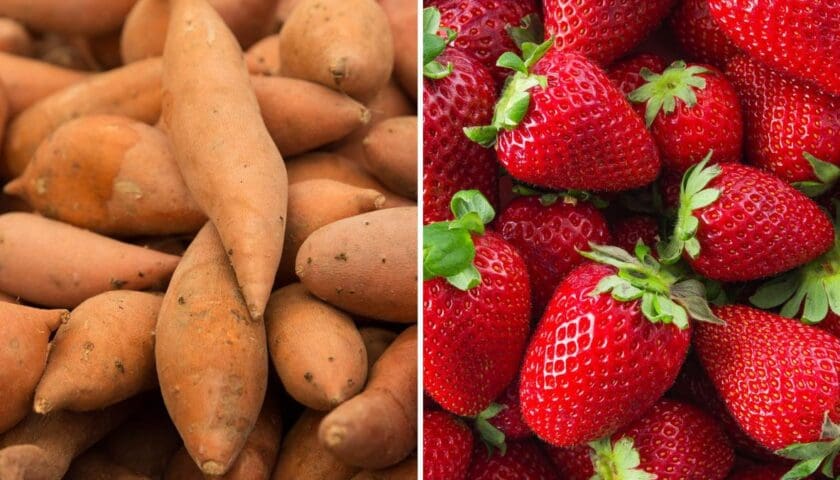
Vegetables accounted for 40 products and 36,000 tons of total exports. Sweet potatoes led that category at 13,000 tons, followed by onions at 7,000 tons and potatoes at 4,000 tons. Fruit exports covered 32 products and reached 30,000 tons, with strawberries topping the list at 10,000 tons and citrus fruits and mangoes each contributing 6,000 tons.
Saudi Arabia ranked as the largest destination for Egyptian food exports during the week. Sudan, Libya, Spain, and the United States followed, and Egypt shipped to 181 importing countries.
On the import side, Egypt received 2,002 food consignments totalling around 176,000 tons, brought in by 871 companies. Imports exceeded exports by 16,000 tons, with the main imported commodities being wheat, various oils, and soybeans.
Russia supplied the largest share of food imports to Egypt during the period, followed by Indonesia, the United States, China, and Malaysia, with 84 countries supplying the Egyptian market in total. Alexandria Port cleared the most incoming consignments at 696, followed by Cairo International Airport with 390 and Port Said with 250.
The key international trade partners driving Egypt’s food supply chain include Saudi Arabia, Sudan, Libya, Spain, and the United States for exports, and Russia, Indonesia, the United States, China, and Malaysia for imports. Among the ports handling outbound shipments, Safaga processed the most export consignments at 775, ahead of Damietta with 445 and Alexandria with 440.
The consignments were handled by 1,475 exporting companies and covered around 654 distinct food products, spanning vegetables and fruits. This data highlights the diverse range of food products and the vast network of over 180 importing countries involved in Egypt’s agricultural economy.
Overall, the statistics reflect a robust period of international logistics and food exchange, demonstrating Egypt’s position as a key player in global agricultural trade. The weekly trade figures confirm Egypt’s capacity to maintain consistent export volumes while securing essential food imports, contributing to national food security and economic stability.
Sign up HERE to receive our email newsletters with the latest news and insights from Africa and around the world, and follow us on our WhatsApp channel for updates.