
Ghana Employers, ILO validate framework to strengthen child labour referrals
The framework introduces a 12-month roadmap, digital coordination tools and simplified reporting systems to improve child protection across four districts.
GHANA – The Ghana Employers’ Association (GEA), in collaboration with the International Labour Organization (ILO), has developed a Bipartite Community Coordination (BCC) Framework to strengthen the identification, referral and follow-up of child labour cases in four districts.
The framework was validated during a two-day workshop held in Bibiani from August 26 to 27 under the ILO’s ACCEL Africa Project. It is designed to improve coordination among community and district institutions responsible for child protection in Bia East, Juaboso, Wassa Amenfi East and Bibiani Anhwiaso Bekwai.
The workshop brought together 45 stakeholders, including Community Child Protection Committees, district institutions, employers and workers. Participants focused on strengthening child-protection structures rather than creating a parallel system.
They examined how child labour concerns identified in communities can be documented, referred to institutions and followed up until they are resolved.
A key outcome was the validation of the BCC Framework and an accompanying 12-month coordination roadmap. Under the roadmap, the four districts will establish a database of Community Child Protection Committees and focal persons, supported by a contact directory to improve communication and referrals.
A WhatsApp-based coordination platform will connect community and district focal persons to facilitate information sharing and highlight unresolved referrals.
The roadmap provides for monthly focal-person check-ins and quarterly clustered support visits to review emerging concerns and strengthen community support.
The framework introduces simplified tools, including concern notes, referral forms, acknowledgement and feedback slips, follow-up registers and cross-community handover notes. Refresher training will strengthen the ability of committee members to identify, document, refer and follow up child labour concerns.
Progress will be assessed during the 12-month implementation period, including through an end-of-year capability scorecard.
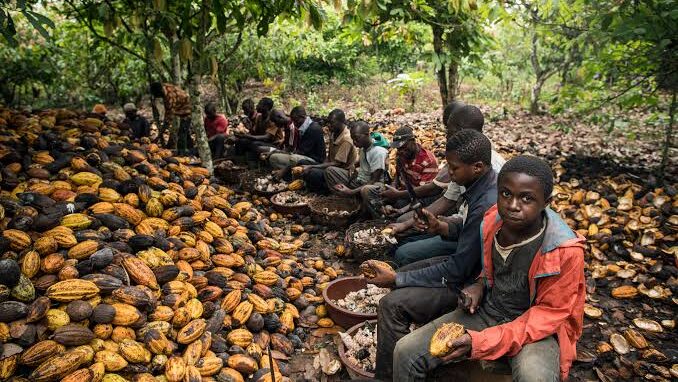
The initiative forms part of a GEA-ILO collaboration launched in July 2025 to accelerate efforts to eliminate child labour in cocoa and artisanal and small-scale gold-mining supply chains across the four districts.
A needs assessment involving 159 enterprises identified gaps in institutional capacity, responsible business practices and compliance with child labour standards. The findings informed a training programme that resulted in about 30 trainers from the cocoa and artisanal mining sectors being certified to support awareness creation and capacity building.
The GEA has also developed an Enterprise Compliance Maturity Model for Responsible Business Conduct to help cocoa and artisanal mining enterprises identify compliance gaps and improve their practices.
While the model focuses on responsible business practices and supply chains, the BCC Framework seeks to improve coordination among institutions responsible for protecting children in communities.
GEA and ILO said the framework and roadmap will provide a coordinated approach for strengthening child labour identification, referral and follow-up across the four districts.
Sign up HERE to receive our email newsletters with the latest news and insights from Africa and around the world, and follow us on our WhatsApp channel for updates.