

Ghana launches 3-5 year roadmap to boost horticultural seed industry
The government is aiming to reach 20 tonnes per hectare by using new varieties developed through a research project with Nigerian partners.
GHANA – Ghana has launched a three- to five-year roadmap to strengthen its horticultural seed industry, focusing on increasing access to improved planting materials adapted to local conditions, the Ministry of Food and Agriculture said.
The ministry launched the roadmap on Thursday, Sept. 17, setting strategic priorities to increase the availability, accessibility, and use of improved planting materials adapted to Ghana’s farming conditions.
The government will focus interventions on strengthening domestic seed production and supporting companies operating in the industry, while improving farmers’ access to quality seeds and developing varieties adapted to local conditions.
The announcement comes as Ghana strengthens governance across its seed industry. On June 25, the government formally inaugurated the National Seed Council (NSC), an institution under the Ministry of Food and Agriculture, established by the Plants and Fertilizer Act of 2010.
The NSC advises authorities on seed policy, oversees industry regulation, and monitors compliance with standards for seed production, certification, and distribution.
However, according to data cited by the authorities, farmers in Ghana still obtain a significant share of their seeds through informal channels.
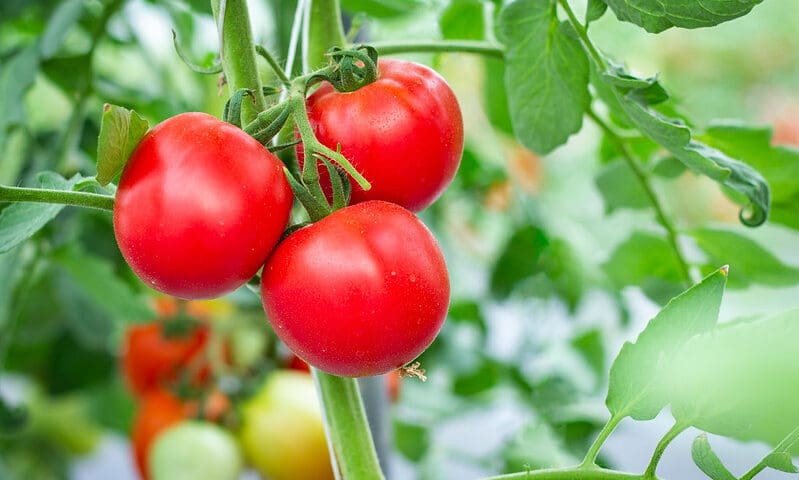
Ghana’s new strategy also comes as the government seeks to boost productivity across several horticultural crops. In March, Agriculture Minister Eric Opoku said Ghanaian farmers produced an average tomato yield of about 8 tonnes per hectare.
The government is aiming to reach 20 tonnes per hectare by using new varieties developed through a research project with Nigerian partners. Opoku identified the seed varieties farmers currently use as a major constraint on productivity growth.
Moreover, Ghana launched the Ghana Tomato Self-Sufficiency Initiative (GHATSI) on Sept. 15 and initially targets production of about 100,000 tonnes of tomatoes during the 2026/2027 season, with annual production to increase to 400,000 tonnes.
The Ministry of Food and Agriculture is implementing the initiative with support from FarmMate Limited, providing participating smallholder farmers with financing of 20,000 Ghanaian cedis per acre (equivalent to US$4,295 per hectare), along with inputs, technical assistance, insurance, and access to guaranteed markets.
Ghana aims to reduce its dependence on tomato imports and close an annual domestic supply deficit estimated by official data at nearly 300,000 tonnes.
Finally, beyond tomatoes, a stronger seed system could support Ghana’s production ambitions across other horticultural value chains.
Sign up HERE to receive our email newsletters with the latest news and insights from Africa and around the world, and follow us on our WhatsApp channel for updates.