
Sharjah-Oman logistics corridor handles US$463M in cargo over first three months
The markets served have expanded to include the domestic market, Saudi Arabia, and several markets across Africa and Asia.
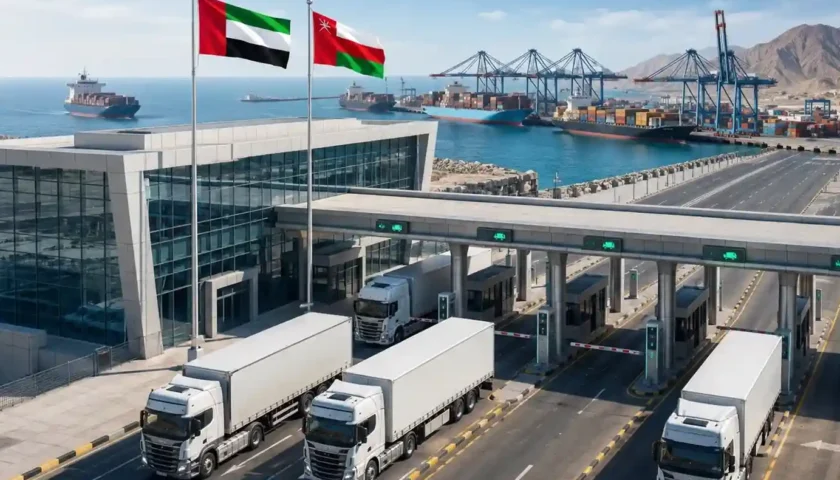
UAE – The logistics corridor launched by the Sharjah Ports, Customs and Free Zones Authority, in cooperation with Oman Customs, has handled approximately AED 1.7 billion (US$463 million) in cargo value in its first three months of operation, according to the authority.
The corridor, inaugurated on 17 May 2026, recorded more than 34,000 truck movements and over 32,000 processed customs declarations.
Cargo value increased 66.26% compared to the corresponding period last year, reflecting growing trade activity and demand for the logistics and customs solutions the corridor provides.
Integrated sea-land model
The corridor connects cargo flows between ports and logistics hubs via the Khatmat Malaha Border Crossing in Kalba and the Al Madam Border Crossing, extending into Oman. It links Sharjah’s ports and other UAE ports with the ports of Sohar, Duqm, and Salalah in Oman.
Operating through both crossings gives the system greater operational flexibility, providing two complementary cargo routes based on destination and logistics requirements.
Additionally, Khatmat Malaha benefits from its proximity to Sohar Port, approximately 70 kilometers away, while Al Madam provides access to the main road network.
Customer growth and cargo diversity
More than 200 new importer codes were registered during the first months of operation, reflecting the growing number of customers using the corridor’s services.
Meanwhile, cargo moving through the corridor has ranged from equipment and vehicles to food, agricultural products, building materials, and spare parts.
The markets served have expanded to include the domestic market, Saudi Arabia, and several markets across Africa and Asia.
Leadership comments
Mohammed Ibrahim Al Raisi, Director of Border Crossings and Entry Points Affairs at the Sharjah Ports, Customs and Free Zones Authority, said: “The early results recorded by the corridor during its first months of operation reflect the success of the vision underpinning the project. That vision brings together the efficiency of land border crossings, the speed of customs procedures, and the capabilities of ports and free zones within an interconnected logistics ecosystem.”
Al Raisi said the next phase will focus on expanding the base of companies using the corridor, attracting more shipping companies, shipping lines, and logistics service providers, and broadening the range of available services and routes.
Sign up HERE to receive our email newsletters with the latest news and insights from Africa and around the world, and follow us on our WhatsApp channel for updates.