
Port of Los Angeles breaks 118-year record with 1.04 million TEUs
The Port of Los Angeles has now recorded six consecutive months above 800,000 TEUs, a level it last sustained during the 2021 import surge.
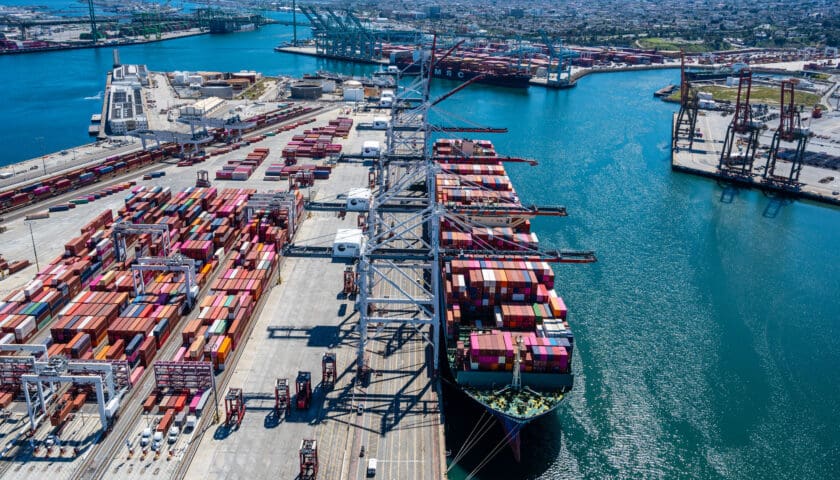
UNITED STATES – The Port of Los Angeles has surpassed the July 2025 monthly record by more than 20,000 units, handling 1,042,652 Twenty-Foot Equivalent Units in September 2026, its busiest month in 118 years, according to port data.
The record month produced the busiest quarter in port history, with nearly 3 million TEUs moving across its docks from July through September. From June through September, the port handled nearly 4 million TEUs, its strongest four-month stretch on record.
During the first nine months of 2026, the port handled nearly 8.1 million TEUs, more than 3% ahead of the same period last year.
Volume drivers and shipper behaviour
Gene Seroka, port executive director, attributed the performance to consumer demand, inventory replenishment and cargo reallocation.
“Consumer demand remains resilient, importers are replenishing inventories and more cargo is being allocated to Los Angeles as shippers navigate continued challenges along other global trade routes,” he said.
Front-loading ahead of potential tariff changes has been a consistent feature of 2026 transpacific volumes, and importers have shifted routing towards US West Coast gateways as Red Sea disruption, Panama Canal draft restrictions and Asian port congestion lengthen alternative routes.
The Port of Los Angeles has now recorded six consecutive months above 800,000 TEUs, a level it last sustained during the 2021 import surge. Loaded imports rose 12% year on year in September, while loaded exports rose 4%.
Capacity pressures and corridor context
The record volumes test inland capacity as much as marine terminals. Rail dwell times at Los Angeles and Long Beach have averaged more than five days in 2026, and truck turn times at the San Pedro Bay terminals have lengthened during peak weeks.
The broader context is a transpacific market operating under multiple constraints simultaneously. For instance, Asian port congestion reached 4.3 million TEU in September, exceeding the 4.0 million TEU recorded at the pandemic peak, according to Linerlytica.
Meanwhile, Cape of Good Hope diversions continue to absorb between 5% and 7% of global container capacity.
Moreover, Panama Canal draft restrictions, with the maximum authorized draft reduced to 47.5 feet from September 3, have pushed some all-water services towards US West Coast routings.
Lastly, the Port of Los Angeles also benefited from Gemini Cooperation’s return of four services to the Suez Canal, which has altered rotation patterns across the transpacific route.
Sign up HERE to receive our email newsletters with the latest news and insights from Africa and around the world, and follow us on our WhatsApp channel for updates.