

DP World advances Jeddah Logistics Park, Al Rawdah SEZ
The project supports Oman Vision 2040 and Dubai Economic Agenda D33.
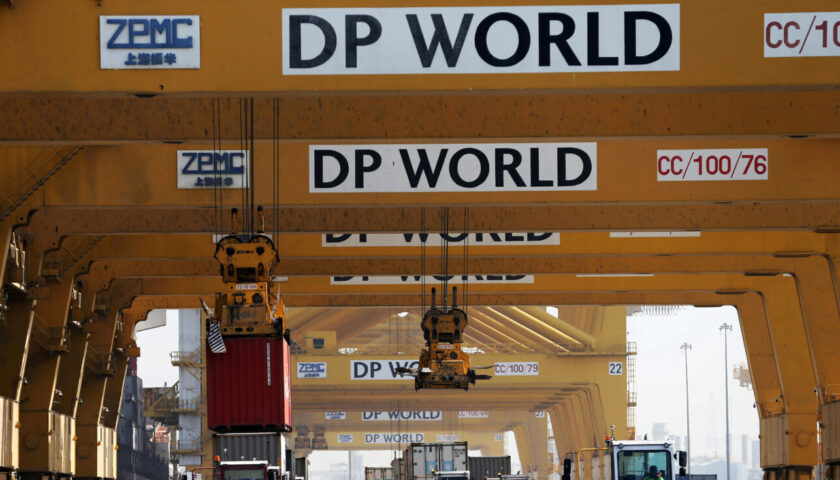
UAE – DP World has said work is in full swing on its US$250 million Jeddah Logistics Park, while development continues on the Al Rawdah Special Economic Zone near the Oman-UAE border, according to a company statement.
Established in 2025 under a 50-year agreement with Oman’s Public Authority for Special Economic Zones and Free Zones, the Al Rawdah zone’s first phase covers 14 square kilometers, with future expansions planned to reach 25 square kilometres.
The project supports Oman Vision 2040 and Dubai Economic Agenda D33.
Land corridors and customs integration
Shehab Mohamad Aljasmi, Chief Commercial Officer for Ports and Terminals at DP World GCC, said the company has not suspended any major regional investment projects.
Its trucking network comprises more than 3,000 trucks, managed and operated by the company, including 700 owned by DP World, with around 3,500 TEUs moving through land corridors each day.
Cargo arrives at ports outside the Strait of Hormuz before being transported through customs-controlled corridors to Jebel Ali for clearance, storage and distribution.
Additional options include corridors through Sohar and Duqm in Oman, as well as connectivity via Jeddah.
Dubai Customs and Oman Customs activated the Green Corridor within 72 hours, enabling containers to move directly to Jebel Ali in sealed trucks under customs control.
The corridor facilitated trade worth around AED 34 billion from March 1 to June 30.
Terminal capacity and rail integration
The South Container Terminal at Jeddah Islamic Port recorded record throughput in July and October 2026, following four to five years of expansion investment that increased annual capacity to 4 million TEUs.
Aljasmi said Etihad Rail had helped connect Jebel Ali to the UAE national railway network, enabling some cargo to shift from road to rail.
Future priorities include pre-agreed protocols, pre-arrival exchange of cargo data, and permanent cross-border links.
The 3,500 TEUs moving daily through land corridors represent capacity that did not exist before 2026.
Lastly, whether that volume persists once Hormuz transit normalizes depends on whether the corridor’s cost structure remains competitive with direct Gulf routing, not merely on whether it functions during a disruption.
Sign up HERE to receive our email newsletters with the latest news and insights from Africa and around the world, and follow us on our WhatsApp channel for updates.