
ONCF, Maersk sign MoU to expand rail freight in Morocco
A second focus is on developing lower-emission rail-based inland transportation solutions.
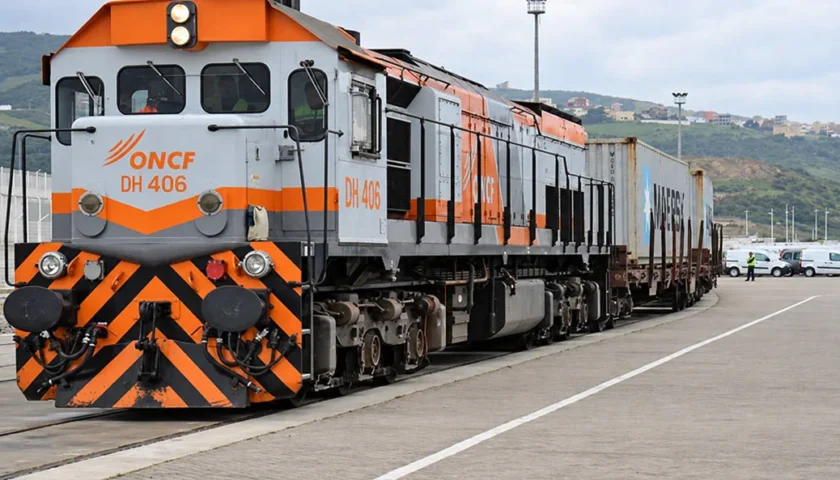
MOROCCO – Morocco’s national railway operator ONCF and A.P. Moller – Maersk have signed a memorandum of understanding to explore joint development of rail transport and integrated logistics solutions in Morocco, according to a joint statement.
The partnership aims to increase the use of rail for containerized cargo and accommodate growing import and export flows.
Scope and strategic context
Both partners will explore how ONCF’s national rail network and multimodal expertise, combined with Maersk’s global network and integrated logistics capabilities, can enhance connectivity between Morocco’s main ports and its key industrial and economic regions.
A second focus is on developing lower-emission rail-based inland transportation solutions.
Morocco has established itself as a hub for international supply chains, supported by its position between Europe, Africa and the Middle East, infrastructure investment and global market connections.
New automotive and aerospace production sites, alongside the development of Tangier Med as a maritime hub, illustrate the country’s growing role.
According to the World Bank, Morocco’s economy grew by an estimated 4.9% in 2025 and is expected to grow by 4.4% in 2026.
Mohamed Rabie Khlie, Director General of ONCF, said: “This Memorandum of Understanding is an important step to strengthen the role of rail within Morocco’s logistics ecosystem. By combining ONCF’s national rail infrastructure and multimodal expertise with Maersk’s integrated logistics capabilities and global Ocean network, we can explore scalable solutions to reinforce the competitiveness and resilience of Moroccan supply chains.”
Guillaume Sauzedde, Managing Director Region Europe at A.P. Moller – Maersk, said: “Morocco has successfully established itself as a key trade and logistics hub connecting Europe, Africa and global markets. As the economy and international trade continue to grow, efficient connections between the ports and the inland production and consumption centres will be essential for further growth and success.”
Commercial rationale
Morocco’s automotive and aerospace sectors operate on tight delivery schedules, and the reliability of inland transport affects whether plants can maintain production cadence.
As a result, rail connections between Tangier Med and the industrial zones around Kenitra, Casablanca and Tangier would reduce reliance on road haulage for container movements that currently compete with passenger and freight traffic on the highway network.
However, the MoU does not disclose implementation timelines, financial commitments, operational targets, or specific volume projections.
Finally, the partnership follows Maersk’s September 2026 launch of an integrated rail service linking Tangier and Casablanca to ease port congestion, and its development of an inland logistics hub at Komatipoort in South Africa.
Sign up HERE to receive our email newsletters with the latest news and insights from Africa and around the world, and follow us on our WhatsApp channel for updates.