Gulftainer completes Suksawat Terminal acquisition in Bangkok
The acquisition marks Gulftainer’s entry into Thailand.
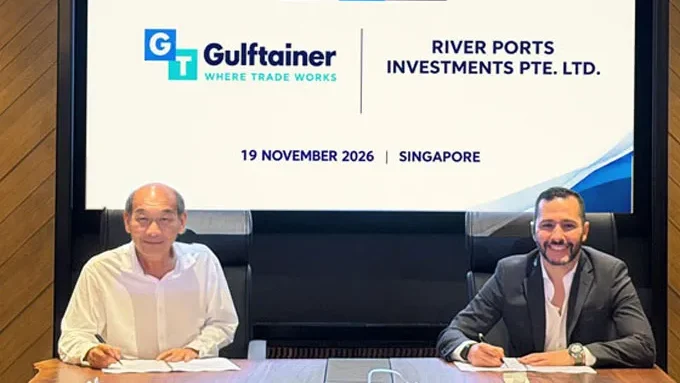
THAILAND – Gulftainer has completed the acquisition and operational takeover of Suksawat Terminal, a container terminal in Bangkok, according to a company statement.
The agreement was signed in Singapore by Farid Belbouab, Group CEO of Gulftainer, and Thor Soon Hock, Director of Suksawat Terminal.
Strategic positioning and integration plans
The terminal secures a location on the Chao Phraya River, serving Greater Bangkok and key trade flows.
The acquisition strengthens Gulftainer’s presence in Southeast Asia, creates opportunities to integrate GT Ports, GT Logistics, GT Parks and GT Lines, and expands the group’s network.
The milestone transforms Gulftainer’s strategic investment into operational ownership, positioning the group to enhance terminal capabilities, strengthen connectivity between Thailand’s industrial and manufacturing hubs and deliver value to customers across the ASEAN region.
Farid Belbouab, Group CEO of Gulftainer, said: “Thailand is a major manufacturing and trade hub, with a strategic position at the heart of ASEAN. Suksawat gives us a strong platform in Greater Bangkok, directly connected to some of the country’s and the region’s most important industrial and logistics corridors.”
“Thailand is a new market for Gulftainer, but our ambition is long-term. We are here to invest, to operate, and to grow with our customers and partners,” he added.
Commercial context and network expansion
The Chao Phraya River terminal serves barges and feeder vessels moving containers between Bangkok’s industrial zones and the deep-sea ports at Laem Chabang and Map Ta Phut.
Bangkok’s manufacturing base, including automotive, electronics, and consumer goods production, generates container volumes that require inland waterway connections to ocean gateways, as road haulage between Bangkok and Laem Chabang faces congestion on Highway 7.
Moreover, the river route offers an alternative to road transport for containers moving to and from deep-sea ports.
For shippers in Greater Bangkok’s industrial estates, the terminal provides a waterway connection that reduces reliance on trucking for the inland leg of the journey.
The acquisition marks Gulftainer’s entry into Thailand. The company operates ports and terminals in the UAE, Iraq, Brazil and has expanded its logistics footprint through Sharjah Dry Ports.
Its network includes the Khorfakkan Commercial Terminal, Sharjah Commercial Terminal, Momentum Logistics’ inland network, Gulf Connect feeder services and the Iraq Commercial Terminal at Umm Qasr.
Lastly, the statement does not disclose the transaction’s financial value, the terminal’s operational capacity, infrastructure details, or Gulftainer’s capital investment roadmap in Thailand.
Sign up HERE to receive our email newsletters with the latest news and insights from Africa and around the world, and follow us on our WhatsApp channel for updates.