

Djibouti, World Bank launches AgriConnect Compact to cut food imports
The compact prioritizes stronger producer organizations, animal health services, agricultural infrastructure, and access to finance.
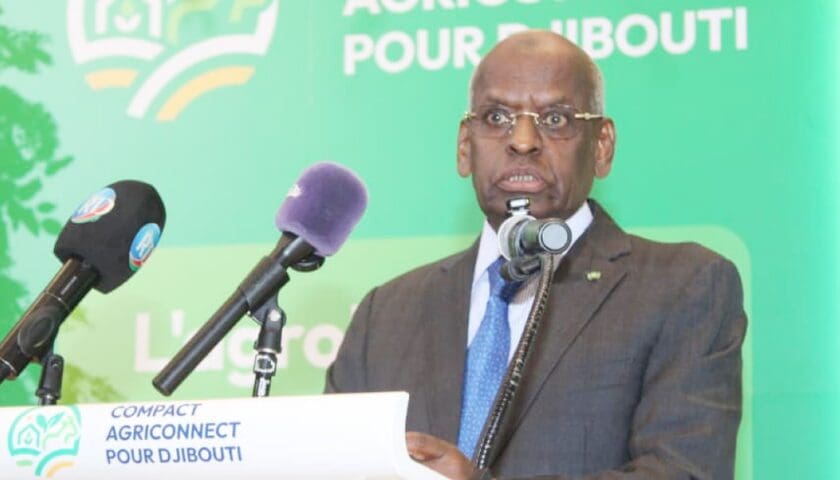
DJIBOUTI – Djibouti has launched an AgriConnect Compact with the World Bank Group to develop livestock, horticultural, and date production value chains to reduce its dependence on imported food and attract private investment in agriculture.
Launched on September 14, the compact unites the government, producers, agribusinesses, financial institutions, and development partners.
It aims to advance reforms and investments to increase agricultural productivity, improve access to finance, and strengthen infrastructure across the three priority value chains. According to the World Bank, Djibouti meets about 90% of its food needs through imports.
Djibouti is the first country in the World Bank’s Middle East, North Africa, Afghanistan and Pakistan region to officially launch AgriConnect, part of the bank’s broader effort to connect farmers to markets, finance and agricultural services and to mobilize private investment in food systems.
The initiative aims to connect 300 million smallholders and family farmers to markets, finance and agricultural services globally by 2030.
Agricultural production in Djibouti faces significant physical constraints. Arable land accounts for only a small share of the country’s territory, and average annual rainfall is about 130 millimeters, according to the World Bank.
As a result, limited water and cultivable land constrain crop production and leave the country vulnerable to international food prices and supply disruptions.
However, livestock provides a strong foundation for domestic agricultural activity, accounting for about 75% of agricultural GDP and supporting a substantial share of rural livelihoods, according to the World Bank.
Therefore, the compact prioritizes stronger producer organizations, animal health services, agricultural infrastructure, and access to finance.
On the other hand, Horticulture and dates offer opportunities to expand domestic production and local value addition in areas where Djibouti already has production capacity.
In March 2026, the World Bank approved a separate US$25.75 million IDA grant for Djibouti’s Economic Diversification Program, the first phase of a planned US$75.75 million financing envelope through 2034.
The program combines World Bank financing with International Finance Corporation support to strengthen the private sector and create jobs.
Finally, the agricultural push also aligns with Djibouti’s broader diversification challenge, as the economy remains heavily concentrated in services linked to its strategic location and port infrastructure.
Sign up HERE to receive our email newsletters with the latest news and insights from Africa and around the world, and follow us on our WhatsApp channel for updates.