

Ethiopia doubles Modjo logistics hub capacity to 1 million containers
Ethiopia aims to capture a larger share of intra-African trade through improved logistics infrastructure.
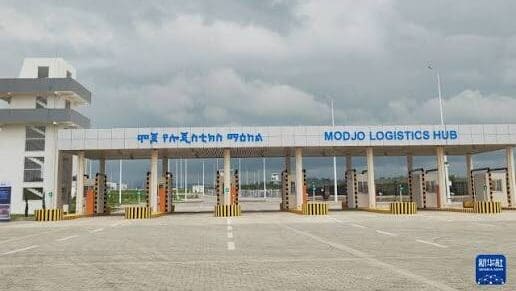
ETHIOPIA – Ethiopia has inaugurated the first phase of the Mojo logistics hub expansion, doubling annual capacity to about 1 million 20-foot containers to reduce reliance on Djibouti’s ports, according to State Minister for Transport and Logistics Denge Boru.
Djibouti port handled 17.57 million tonnes of Ethiopian imports and exports during the 2025/26 fiscal year ended July 7, 2026, representing 96.71% of Ethiopia’s total cargo traffic.
Alternative corridors account for a limited share: Berbera 2.74%, Tadjourah 1.23%, and Mombasa-Moyale 0.56%.
Reducing logistics costs and dependence
Ethiopia has sought to develop alternative routes through the Berbera, Tadjourah and Mombasa-Moyale corridors, but these still handle a small share of trade.
Therefore, the Mojo expansion aims to move more logistics functions onto Ethiopian territory and reduce constraints on cargo transportation. Authorities estimate the country’s annual logistics costs exceed US$1.5 billion.
The Mojo platform covers 60 hectares and includes terminals and warehouses for cargo handling and storage. The facility will allow operators to package dry bulk products directly in Ethiopia, adding on-site cargo processing capability.
Transport modal split and corridor integration
Road transport carried nearly 80% of Ethiopian freight during the 2025/26 fiscal year, with 14.08 million tonnes. The Ethiopia-Djibouti railway handled 18.92% of freight, while air cargo accounted for 0.94%.
The expansion is expected to help Ethiopia better leverage the African Continental Free Trade Area and strengthen trade with regional markets. Addis Ababa also awaits new maritime outlets, including a potential direct sea route under agreements with Somaliland.
Regional trade context
Ethiopia’s dependence on Djibouti’s ports has persisted for years despite efforts to diversify. The Mojo hub is designed to give Ethiopia greater control over the segment between maritime gateways and domestic consumption or production centers.
The African Continental Free Trade Area, which entered into force in 2019, brings together 55 African Union member states in a market of about 1.4 billion people with a combined GDP of approximately US$3.4 trillion, according to the AfCFTA Secretariat. Ethiopia aims to capture a larger share of intra-African trade through improved logistics infrastructure.
This development aims to give Ethiopia greater sovereignty over its supply chain while reducing the financial burden of domestic shipping costs, with the government maintaining a focus on corridor integration and regional commerce.
Overall, the initiative’s success hinges on the facility’s ability to integrate with existing road and rail networks connecting maritime gateways to the hinterland.
Sign up HERE to receive our email newsletters with the latest news and insights from Africa and around the world, and follow us on our WhatsApp channel for updates.