

Tanzania beats 2030 avocado target four years early with 52,000 tons
The key risk to watch is whether infrastructure keeps pace with production.
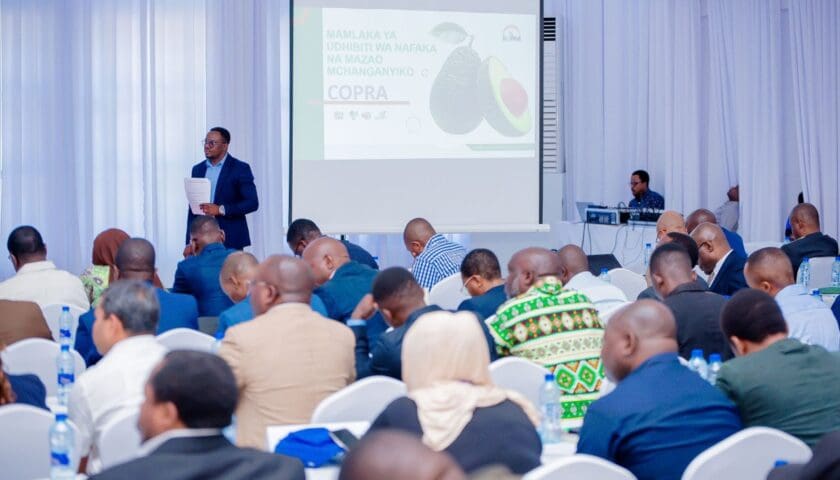
TANZANIA – Tanzania has surpassed its 2030 avocado export target four years early, shipping 52,000 tonnes in 2025/2026, against a national goal of 40,000 tonnes, according to the Cereals and Other Produce Regulatory Authority (COPRA).
COPRA says the milestone reflects deliberate investment and stronger coordination across the value chain.
Government and private-sector efforts strengthened access to quality improved seedlings, extension services, and irrigation; improved post-harvest handling, collection, and cold-chain infrastructure; expanded international market access; and reinforced quality standards, regulation, and trade formalization.
As a result, these measures progressively connected farmers to markets, production to infrastructure, and Tanzanian avocado to global buyers.
The Third National Avocado Stakeholders Meeting, held in Dodoma, reviewed progress and set priorities for the 2026/2027 financial year.
The meeting brought together more than 400 participants, including farmers, buyers, processors, traders, investors, financial institutions and government institutions
For investors, the significance lies in what happens after they meet a volume target. According to COPRA, the conversation has shifted to strengthening market systems, formalizing trade, improving quality and traceability, expanding value addition, and greater economic returns for farmers and the country.
Moreover, these priorities focus on margins rather than volume, addressing a common weakness in African horticulture: export growth often outpaces the systems needed to capture its value.
Trade formalization and traceability are the practical levers. Informal cross-border trade and inconsistent documentation limit farmers’ access to premium buyers and reduce the prices they receive.
Strengthening these systems enables exporters to meet European and Middle Eastern buyers’ requirements more consistently and reduces rejection risk.
Value addition is the second lever. Tanzania currently exports most avocados as fresh fruit, leaving processing, oil extraction and pulp production largely undeveloped.
Therefore, expanding domestic processing would create additional demand for lower-grade fruit that cannot meet fresh export standards, reducing waste and stabilizing farmgate prices.
Meanwhile, the key risk to watch is whether infrastructure keeps pace with production. Cold-chain capacity, collection centers and transport links determine how much of the increased harvest reaches export markets in saleable condition.
However, if production grows faster than logistics, farmers could face oversupply and price pressure despite the record volumes.
Finally, COPRA has positioned the coming year around converting rapid expansion into sustained prosperity, with quality, formalization and value addition as the central priorities.
Sign up HERE to receive our email newsletters with the latest news and insights from Africa and around the world, and follow us on our WhatsApp channel for updates.