
ZIM raises 2026 EBITDA guidance to US$2.7-3.0B
The revision reflects continued strong market demand and favourable momentum in freight rates across the second half of 2026.
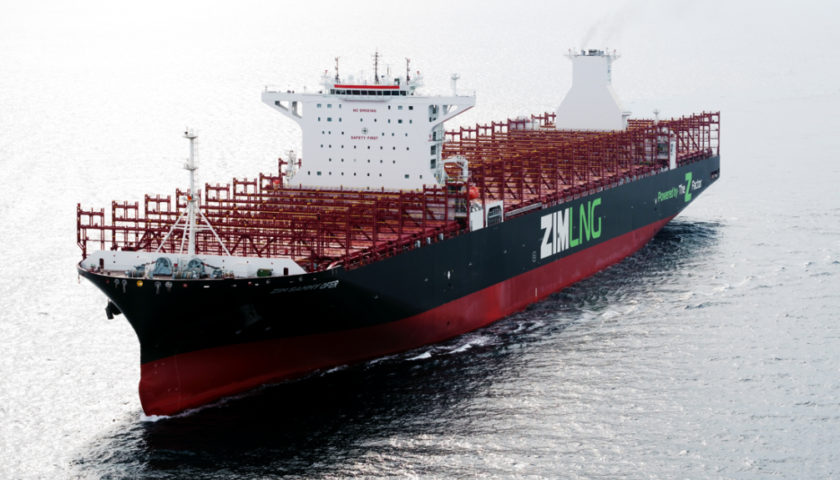
ISRAEL – ZIM Integrated Shipping Services has raised its full-year 2026 guidance, now expecting Adjusted EBITDA of US$2.7 billion to US$3.0 billion and Adjusted EBIT of US$1.4 billion to US$1.7 billion, according to a company statement.
The revised figures compare with the previous guidance issued on August 19, 2026, of US$2.0 billion to US$2.4 billion for Adjusted EBITDA and US$700 million to US$1.1 billion for Adjusted EBIT.
The midpoint of the updated guidance indicates a 30% increase in Adjusted EBITDA and a 72% increase in Adjusted EBIT.
What is driving the upgrade
The revision reflects continued strong market demand and favourable momentum in freight rates across the second half of 2026.
The upgrade follows a broader recovery in container shipping rates, with the Shanghai Containerized Freight Index averaging 1,957 points in the first half of 2026, up 15% from 1,701 points a year earlier.
Several factors have supported rate levels. For instance, Asian port congestion reached 4.3 million TEU in September 2026, according to Linerlytica data, surpassing the 4.0 million TEU stranded at the pandemic’s peak.
Meanwhile, diversions around the Cape of Good Hope are absorbing 5% to 7% of global container capacity, roughly 1.7 to 2.4 million TEU, effectively removing vessels from the active fleet.
Lastly, Red Sea routing uncertainty has persisted into 2026, with carriers including Maersk and Hapag-Lloyd only partially resuming services through the Suez Canal.
What the numbers signal
A 72% EBIT upgrade, compared with a 30% EBITDA upgrade, suggests that ZIM expects to convert a larger share of revenue into operating profit, likely because higher freight rates flow through to the bottom line without a proportional increase in vessel operating costs.
The timing matters for investors. ZIM raised guidance in August and again in October, suggesting freight rate strength lasted longer than the company expected in its initial forecast.
Moreover, that pattern has been evident across the sector, for instance, Maersk raised its full-year guidance to an underlying EBITDA of US$10.5-12.5 billion in August.
Finally, the upgrade’s durability depends on whether capacity discipline holds. If congestion clears and Suez routings normalize, the capacity withdrawal supporting current rate levels could reverse within a single quarter, and the 72% EBIT revision would rest on rates that no longer prevail.
Sign up HERE to receive our email newsletters with the latest news and insights from Africa and around the world, and follow us on our WhatsApp channel for updates.