
Malawi targets 50,000 Ha of coffee production in push to boost local processing
UNIDO and AICS are supporting Malawi’s efforts to improve coffee quality, strengthen cooperatives, attract investment and expand access to international markets.

MALAWI – Malawi’s plans to expand coffee production and increase local processing were discussed in Johannesburg as industry stakeholders examined ways to retain more value from the sector.
The working lunch, titled “From Bean to Boardroom: Unlocking Value in Malawi’s Coffee Value Chain”, was held alongside the 13th TEHA CEO Dialogue on Southern Africa.
Stakeholders explored cooperation with the United Nations Industrial Development Organization (UNIDO) and the Italian Agency for Development Cooperation (AICS).
Pietro Mininni, chief executive officer of TEHA Africa, described the gathering as a step towards stronger cooperation between Italy and Malawi.
“How can we brand and increase awareness of the coffee reality in Malawi, which deserves greater recognition in the future?” he asked.
Marco Rusconi, director of AICS, called for development cooperation to move away from extractive relationships and support local production and manufacturing.
“We have to move away from cooperation which is extractive, and put all of us on a ground where we can collaborate to enhance what is locally done, locally manufactured and locally produced,” Rusconi said.
He highlighted traceability as important for access to European markets. European Union anti-deforestation rules require companies to demonstrate that coffee-growing land was not subject to deforestation during a specified period. Rusconi supported the objective but said producing countries should have been more involved in discussions.
“We have to help our African friends, our Malawian friends in this case, understand the regulations in Europe and cope with the difficulties,” he said, adding that traceability and standardisation are essential for exports.
AICS and its partners are supporting coffee quality, local processing and climate resilience. Priorities include better harvesting and storage, roasting and packaging, opportunities for women and young people, and finance for farmers adopting varieties suited to changing conditions.
“There is enough room for everyone today in the coffee sector,” Rusconi said, expressing hope that collaboration could produce a Malawian equivalent of a major Italian coffee brand.
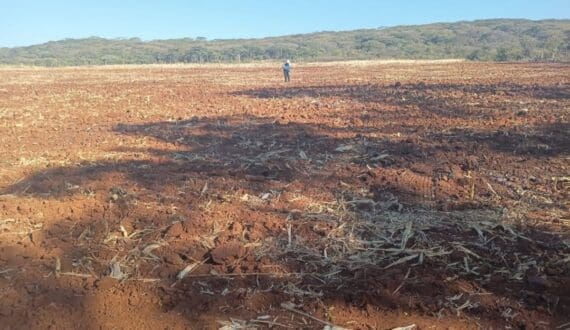
Gianluca Luongo of the UNIDO ACT Coffee Programme linked the discussions to Malawi’s strategy, which aims to expand coffee cultivation to as much as 50,000 hectares while improving productivity, quality and local value addition.
“ACT Coffee is working closely with the government of Malawi, development partners and the private sector, to turn the coffee strategy into concrete action, while helping mobilise funding and investment,” Luongo said.
The programme’s support includes a coffee commission and a training centre in Lilongwe, as well as efforts to strengthen cooperative skills, processing capacity and market access.
Luongo said producers, cooperatives and entrepreneurs would shape the sector’s future, stressing the importance of partnerships that translate strategies into business opportunities.
Sign up HERE to receive our email newsletters with the latest news and insights from Africa and around the world, and follow us on our WhatsApp channel for updates.