

Multimodal transport market to hit US$160B by 2032, DP World Whitepaper reveals
Through its Marine Services business, DP World connects more than 200 ports worldwide and supports over 23,500 sailings annually.
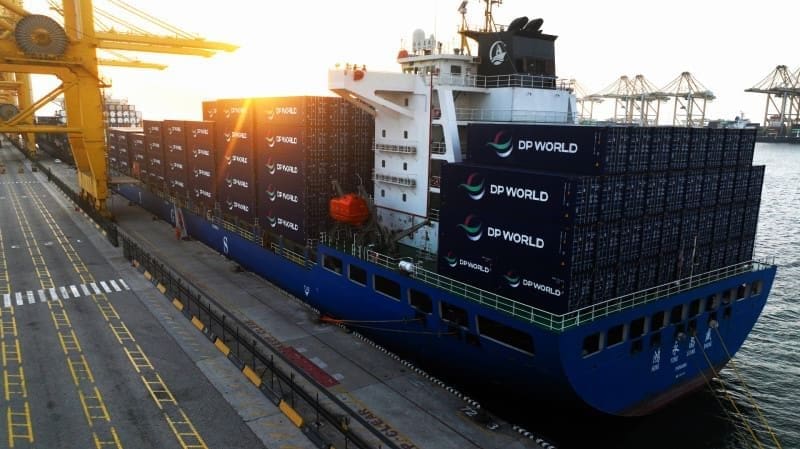
GLOBAL – The global multimodal transport market is expected to reach nearly US$160 billion by 2032, representing a US$60.7 billion growth opportunity driven by demand for more agile, visible, and reliable supply chains.
This shift towards integrated sea, rail, and road networks promises reduced spoilage, faster market access, and greater resilience to disruptions.
Why Multimodal Corridors Matter for Perishable Cargo
As cargo owners navigate geopolitical uncertainty, port congestion, and climate-related pressures, the ability to move goods seamlessly across connected transport modes is increasingly a competitive advantage.
DP World’s whitepaper, “A US$60.7 Billion Opportunity: Multimodal Transport and the Future of Global Trade,” examines how integrated transport networks are redefining the movement of goods across regional and global markets.
This includes coastal and feeder shipping services linking regional ports, as well as rail and road solutions that move cargo inland, enabling more integrated, end-to-end logistics across key trade corridors.
For fresh produce, seamless transfers between modes reduce handling points, minimize temperature breaks, and preserve product quality from farm to shelf.
DP World’s Operational Network
Through its Marine Services business, DP World connects more than 200 ports worldwide and supports over 23,500 sailings annually. Its Shipping Solutions business handles approximately 6 million TEUs, providing the coastal and feeder connectivity that underpins global trade flows.
These services are increasingly integrated with inland logistics capabilities, including rail and road, helping customers move cargo more efficiently across key trade corridors.
The report said this corridor-based approach is becoming more important as supply chains evolve from linear, point-to-point models to more connected regional networks.
Direct Statement from Leadership
Ganesh Raj, Global COO of Marine Services at DP World, said: “As supply chains face increasing disruption, the ability to connect ports, marine services, rail and road into integrated trade corridors is becoming essential.”
“DP World is helping customers maintain reliability and efficiency by enabling more flexible, connected cargo flows across these networks,” he added.
Value for Fresh Produce Trade
For food logistics investors, DP World’s corridor-based approach offers several advantages. For instance, improving inland access through integrated rail and road networks reduces transit times for temperature-sensitive cargo.
Greater coordination across the end-to-end cargo journey enables real-time visibility and proactive responses to disruptions.
As trading patterns are shaped by resilience, regionalization, and speed to market, businesses need transport systems that can flex across multiple modes while maintaining reliability and visibility from origin to destination.
Sign up HERE to receive our email newsletters with the latest news and insights from Africa and around the world, and follow us on our WhatsApp channel for updates.